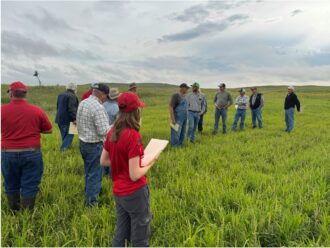
For Roger Licking of LickingAg and some neighboring ranchers across Arthur, Grant, Hooker, Thomas, and Brown counties, Nebraska, the "summer slump" of cool-season pastures has been a recurring hurdle.
Managing 22,500 acres of native rangeland and 2,200 acres of irrigated forage, these producers needed reliable options to maintain beef production when traditional grasses decline in the July heat. With support from a $29,978 NCR-SARE Farmer Rancher Grant, Licking and fellow producers Kevin Anderson, Gary Helmer, Rich Russell, and Pat Schumacher established six on-farm trials to evaluate how various warm-season annuals and multi-species mixes could stabilize forage supply, improve feed quality, and protect the fragile soils of the Sandhills.
The Project at a Glance
The team tested nine different forage varieties and mixes, including hybrid pearl millet, BMR sorghums, and forage corn, against the ranchers' standard practices. Using georeferenced plots over two years, the team was able to track not only biomass production and protein levels but also the "nutrient export" (what is removed from the soil when hay is harvested) and long-term soil health indicators like pH and microbial activity.
Key Findings
The trials gave the producers a chance to look at how different species handle the unique conditions of North-Central Nebraska:
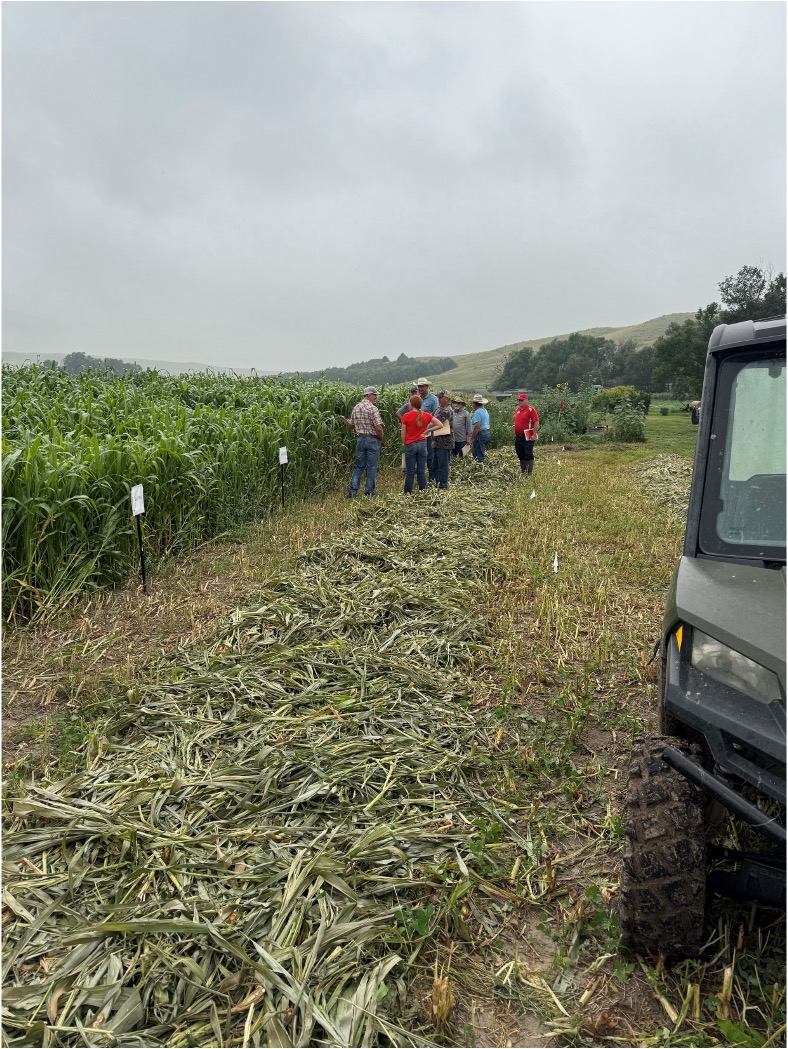
- Potassium Deficiency: Soil tests revealed a surprising, widespread potassium (K) deficiency. While most local fertilizer programs focus heavily on nitrogen (N) and phosphorus (P), the team discovered that haying had been removing nearly as much potassium as it does nitrogen. This deficiency likely contributed to the poor establishment of crops such as millet in certain fields.
- Millet vs. Sorghum: The team found that millet removed less nitrogen than sorghum but was a heavy consumer of potassium. This distinction could be useful for ranchers when planning their nutrient budgets based on their next crop.
- Nutrient Credits: They found that testing irrigation water for nutrients enabled them to leverage existing minerals, significantly reducing the amount of purchased fertilizer needed and saving on operational costs.
- Weed Walks: By walking the plots, they were able to see firsthand which species out-competed weeds. For instance, fast-growing mixes reduced the need for herbicide applications, whereas millet required more intensive weed management to thrive.
Recommendations for Farmers
Based on two years of data and peer-to-peer discussion, the project team suggests the following strategies for producers looking to integrate summer forages:
- Balance Your "Nutrient Bank": Don't just fertilize with nitrogen. Sample your soil specifically for potassium and micronutrients like zinc and manganese. If you are harvesting hay, you must replace the potassium being exported to maintain soil productivity.
- Match Species to Soil pH: Many Sandhills soils are becoming acidic. While liming is a long-term solution, it is expensive. In the short term, it could be helpful to select forage varieties that are more tolerant of low-pH conditions and to consider precision phosphorus placement to help young plants establish.
- Prioritize Weed Management: Weeds can quickly overtake summer annuals. The team said that scouting and, if necessary, early intervention were helpful. One project team member saved his forage yield simply by choosing to spray after a group observation during a plot tour revealed faster-than-expected weed growth.
- Join or Form a Peer Group: The formation of the North Central Nebraska Forage Production Group was a highlight of the project. Sharing data on which mixes worked (and which didn't) reduced the individual risk for all participating ranchers.
"Ranchers in North-Central Nebraska face limited options for summer forage. Cool-season pastures decline in yield and quality during mid-summer, resulting in reduced forage availability,” said Licking. "This project addressed this challenge by evaluating warm-season forage species and multi-species mixes to improve summer forage production, quality, and soil health while providing producers with practical, locally-based guidance."
View Related SARE Grant:
- Summer forage crop options for North-Central Nebraska counties to improve production, forage quality, and soil health (FNC24-1425)