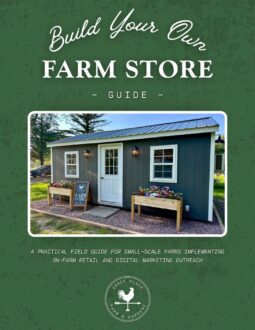
Grace Place Farm & Gardens in Sioux Falls, South Dakota, is proving that for small-scale producers, a well-placed farm store can be as helpful to the bottom line as a good farmers' market. With support from an NCR-SARE Farmer Rancher grant, the group of first-generation farmers explored how simple digital communication combined with a welcoming on-farm store could help them sell directly to local customers and avoid relying on weekly off-farm sales like a farmers market. And they're sharing how they did it.
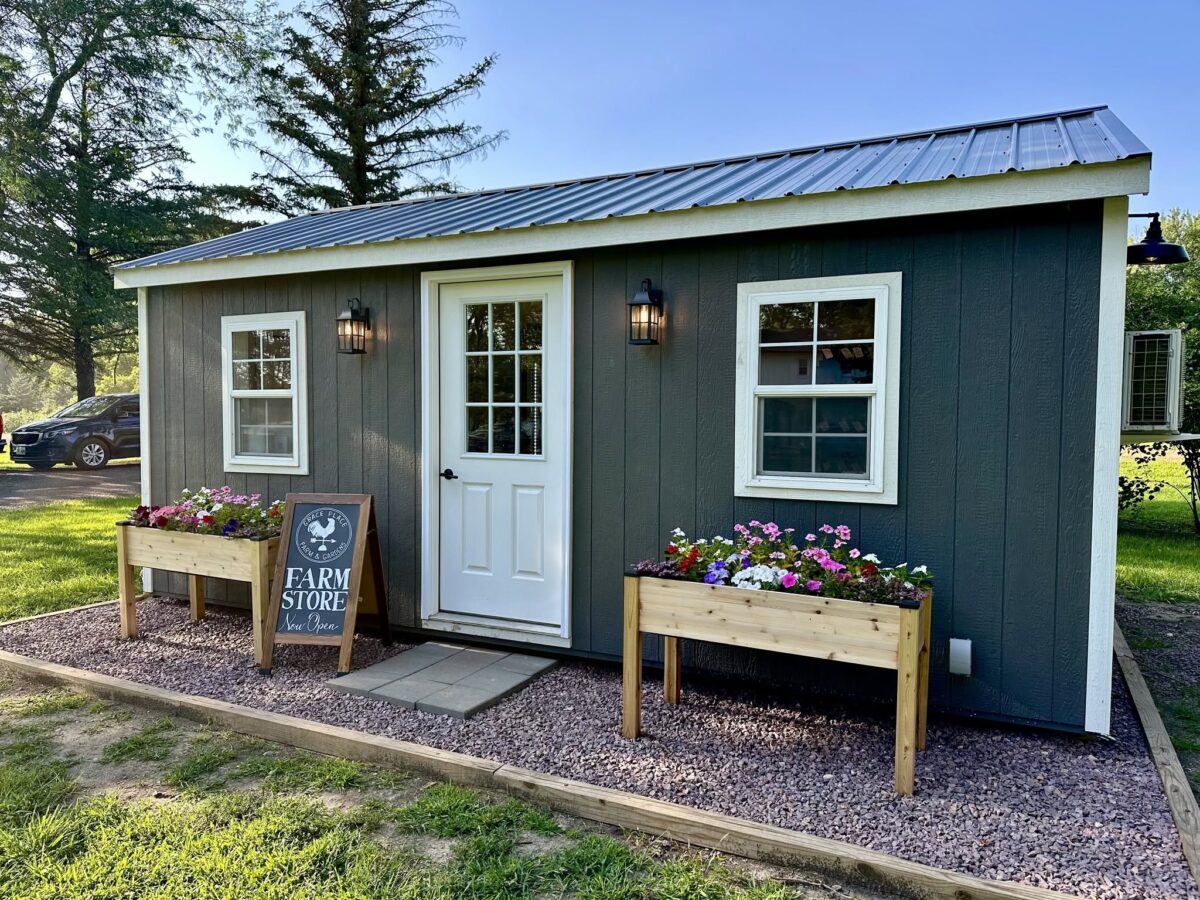
Grace Place's farm director, Mason Prescott, applied for a SARE grant and received project funds to support the team in converting an existing 12'x20' shed into a permanent, year-round on-farm marketplace equipped with commercial refrigeration and a digital Point-of-Sale system. The team tested a “dual-technology” outreach strategy, combining and comparing digital tools like texting and social media with traditional mailers to boost customer engagement. They wanted to know which tools were worth the investment - and they documented the results to share with other farmers.
Connecting with Consumers
They found that consistent communication was what actually brought people to the farm store. They shared several key insights:
- Digital "Front Porch": Social media worked best for storytelling and education, building a personal connection that boosted farm visits.
- The Farm Stand Destination: An on-site market helped neighbors appreciate the value of local produce.
- Maximized Freshness: Direct sales eliminated transit time and damage, significantly reducing food waste and extending shelf life.
- Authenticity Wins: Marketing didn’t require expensive agencies; simple, genuine smartphone updates effectively drove sales.
Making Sales Memorable
Based on the project's results, they had some suggestions for farmers looking to grow their direct-to-consumer sales, especially if they are near population centers where on-farm sales have the potential to replace a farmer’s market:
- Communicate Consistently: Regularly share the “why” behind your work on social media to build trust.
- Build an Experience: Create an on-farm sales area to turn standard transactions into memorable community visits.
- Gather Feedback: Engage online and in person to align your farm’s production with local demand.
- Educate Consumers: Teach buyers about the effort behind small-scale farming to justify sustainable, viable pricing.
“This project demonstrated that a permanent, on-farm retail model in a suburban setting can significantly outperform traditional farmers market participation when paired with easy-to-use technology and intentional community outreach,” said Mason Prescott. “By establishing an on-property farm store with extended hours and clear signage, we allowed customers to engage with the farm on their own schedules and resulted in stronger sales performance, deeper customer relationships, and improved stability.”
DIY Guide for Building a Farm Store
Curious about building a farm store? The grant project team developed a comprehensive resource, "Build Your Own Farm Store instructional guide (PDF)," designed to help other small-scale farmers build and promote a stable, year-round retail model. By documenting the real-world wins and losses of Grace Place Farm & Gardens, this guide serves as a technical manual for farmers who want to reclaim their time and increase their margins by building a permanent neighborhood farm store.
Video Series
In their comprehensive 12-episode educational video series, the team at Grace Place Farm & Gardens provides a transparent, "how-to" look at the lifecycle of designing and operating a professional on-farm marketplace. Guided by the motto "Farm to Family," the project illustrates how small-scale farmers can leverage modern technology and on-farm retail to provide consistent access to fresh, nutritionally dense food. The video series serves as a practical roadmap for other farmers.
Related Resources
-
 Available in Print
Strategic Planning and Evaluation - What Routes Can You Take to Get Where You Want to Go?
Available in Print
Strategic Planning and Evaluation - What Routes Can You Take to Get Where You Want to Go?
-
Available in Print
Planning Task Four: Strategic Planning and Evaluation
-
Available in Print
Section 2: Going Deeper into LLCs
-
Bulletins
Farm to Table: Building Local and Regional Food Systems
Want more information? See the related SARE grant:
- Measuring the Impact of Marketing & Technology in Driving Support for Small-Scale Farms Near Population Centers (FNC25-1476)
This material is based upon work that is supported by the National Institute of Food and Agriculture, U.S. Department of Agriculture through the Sustainable Agriculture Research and Education (SARE) program. Any opinions, findings, conclusions, or recommendations expressed in this publication are those of the author(s) and should not be construed to represent any official USDA or U.S. Government determination or policy.