Showing 1-20 of 30 results
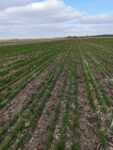
Perennial Groundcovers in Corn and Soy Systems
Perennial groundcovers, also known as perennial cover crops, could be an economically viable strategy to limit soil and nutrient loss for row crop producers.
Food-Grade Grains 101: Online Training
Three simple, click-through modules provide the basics of getting seed in the ground to harvesting and marketing food-grade grains.
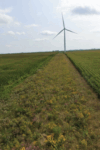
Resources and Case Studies for Implementing Prairie Strips Across the Midwest
Compared to other Conservation Reserve Program practices, prairie strips (CP43) offer many advantages. Prairie strips can be placed both within fields and along their edges. Planting 10% of fields to prairie strips can reduce sediment and nutrient loss. The practice is flexible, with the option of driving on strips when needed for farm operations. And […]
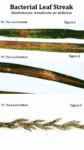
Kernza Disease Guide Cards
As a perennial grain crop, intermediate wheatgrass (Thinopyrum intermedium, marketed under the trade name Kernza in reference to the grain) offers an economic opportunity to growers who are interested in improving the environmental condition of their farmland. Despite this opportunity, there is a possibility that perennial crops can harbor pathogen populations that increase over time. Although […]
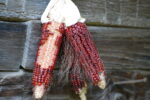
Heirloom Corn Brings Flavor and Potential to Craft Distilling in Illinois
In Illinois, farmers and researchers investigated the potential of growing heirloom corn varieties specifically for use in craft spirits production.
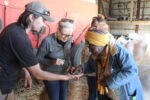
The New Growers’ Guide to Producing Organic Food-Grade Grains in The Upper Midwest
This guide is intended for farmers interested in adding food-grade grains to their rotations, whether they are new to farming, or interested in incorporating these grains into an existing commodity grain, diversified vegetable, or livestock operation.
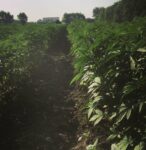
Midwestern Hemp Database
The Midwestern Hemp Database (MHD) is an interactive tool that houses all of the research done by the Midwestern Hemp Research Collaborative (MHRC)
Best Practices for Hemp Production in Kansas
The Kansas Hemp Consortium is working to increase awareness and industry knowledge of industrial hemp.
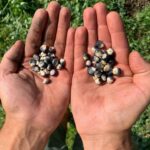
Kansas Farmer Tests Heirloom Corn Varieties
Pantaleon Florez studied no-till growing methods of non-GMO, heirloom dent corn at Maseualkaulli Farm in Lawrence, Kansas.
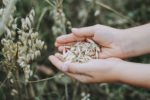
Organic Oat Variety Trial Shares Findings
North Dakota researcher Melanie Caffe-Treml trialed 20 oat varieties under organic management.

Heritage Grains for Craft Brewing
With support from SARE, a Minnesota farmer learned that Conlon barley, Paul hulless oats, and Red Fife wheat could be malted with good flavor for prize-winning beers.
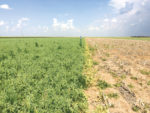
From Fallow to Field Peas
As farmers in western Nebraska face higher cash rents and property taxes, many want a more profitable, sustainable alternative to fallow for crop rotation. Strahinja Stepanovic, a University of Nebraska Lincoln Extension educator, received a SARE grant to find suitable crops for the mix. “Farmers in the semi-arid regions of western Nebraska (14–19 inches of […]
Spring-Grazing Cover Crops with Nebraska’s Knuth Farms
When a fourth-generation farm in Mead, Nebraska began to diversify their primarily cash crop operation in 2012, they gave some thought to cover crops and livestock. Knuth Farms didn’t want to buy cattle or become beef producers, but they did want to diversify their income stream, capture some of the soil benefits of cover crops, […]
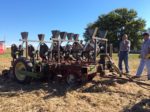
Illinois Farmer Builds Precision Seeder to Maximize Cover Crop Advantage
Ralph “Junior” Upton is no novice when it comes to no-till and cover crops. His grain farm in the northeast corner of Hamilton county Illinois is 100% no-till with 1,800 acres of corn, beans, and wheat, and approximately 1,200 acres in cover crops. Upton has been farming more than 50 years, and the farm has […]
Traditional Fertilizer, Modern Applications for Iroquois White Corn
Farmers have long relied on liquid fish fertilizers because they are a source burn-free nitrogen, phosphorus, and potassium. Traditional Native American growers were well aware of the benefits that decaying fish could bring to their soil; they buried fish under mounded soil and planted the 3 Sisters (corn, beans, and squash) directly on top of […]

Does Open-Pollinated Corn Have a Place on Today’s Organic Farm?
On 205 acres near the picturesque bluffs of the Mississippi River, Stanley Smith raises beef cows and grows organic corn in southeastern Minnesota. He grew up on this small farm in the rolling hills of Winona County and worked alongside his dad until his dad retired. Smith and his wife, Vickie, purchased the farm, and […]
Evaluating the Roller-Crimper for Cover Crops in Corn and Soybean Terraced Ground
The beauty of the rolling hills in Northwestern Missouri can be downright dazzling. But these rolling hills, which captivate with their natural grace, also present a unique set of challenges for the producers who live and work there. Many farmers utilize a practice known as terracing to prevent erosion and surface runoff in their fields. […]
Big Bluestem Management Using High Density/Short Duration Grazing
Big Bluestem is a warm season, perennial bunchgrass with blue-green stems four to eight feet tall. It has been referred to as “ice cream for cows.” Leslea and Brad Hodgson own and operate Root Prairie Galloways, where they raise Galloway beef cows and have big bluestem pastures that they want to protect from the encroachment […]
Increasing Varietal Suitability and Availability of Cowpea and Forage Radish Cover Crop Seed for Northern Climates
With support from a $199,776 Research and Education grant, the Northern Plains Sustainable Agriculture Society Farm Breeding Club and university partners at NDSU, SDSU, UW-Madison, and the University of Puerto Rico, have been evaluating cowpeas and daikon radish from around the world for use and seed production in the Dakotas. On-farm evaluation, selection, and evolutionary […]
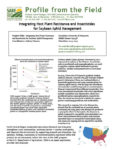
Integrating Host Plant Resistance and Insecticides for Soybean Aphid Management
Soybean aphids (Aphis glycines Matsumura), are a major pest of soybean in the Midwest. Insecticides, such as pyrethroids and organophosphates, are used to suppress soybean aphid outbreaks to prevent yield loss. Another management tactic is host-plant resistance. In 2013, University of Minnesota graduate student Anthony Hanson, received a $9,938 Graduate Student grant to determine if […]