Showing 1-20 of 20 results
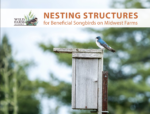
Nesting Structures for Beneficial Songbirds on Midwest Farms
This publication provides guidance on installing and maintaining nesting structures for beneficial songbirds on farms.
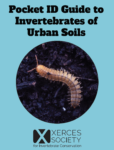
Pocket ID Guide to Invertebrates of Urban Soils
About 25% of all known organisms on the planet are animals that live in the soil through all or a portion of their lives. The majority of these animals are invertebrates that interact with microbes, plants, and each other, forming the life of healthy soils. The invertebrate animals featured in this guide are large enough […]
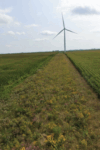
Resources and Case Studies for Implementing Prairie Strips Across the Midwest
Compared to other Conservation Reserve Program practices, prairie strips (CP43) offer many advantages. Prairie strips can be placed both within fields and along their edges. Planting 10% of fields to prairie strips can reduce sediment and nutrient loss. The practice is flexible, with the option of driving on strips when needed for farm operations. And […]
Introduction to Ecological Outcomes Verification: Short-Term Monitoring
This Michigan State University course is designed to teach the foundations of short-term monitoring through the use of Ecological Outcomes Verification (EOV). EOV is a practical and scalable soil and landscape assessment methodology that tracks outcomes in biodiversity, soil health, and ecosystem function (water cycle, mineral cycle, energy flow and community dynamics). EOV applies to […]
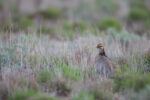
Shedding Light on Ranchers’ Views of Grassland Conservation Payments in Nebraska
University of Nebraska doctoral candidate Kyle Martens found many ranchers are willing to use grazing practices that promote biodiversity.
The Financial Implications of Conservation Agriculture: Insights from Analyses of Farms in the Upper Midwest
Farmers and ranchers are increasingly interested in conservation practices to strengthen soil health and improve water quality for present and future generations. Conservation practices can also help farmers improve their profitability in the face of increasingly volatile weather and uncertain market conditions. Some farmers and ranchers hesitate to adopt these practices because of perceived financial […]
An Outreach Toolkit for Conservation
A new toolkit is available for conservation professionals to use in planning and executing conservation outreach from the National Wildlife Federation.
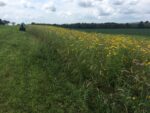
Prairie Strips as a Farmland Conservation Practice
Farmers and researchers in Iowa have been planting prairie strips in their crop fields to help reduce surface runoff.
Advancing Grassland Conservation in Nebraska
Nebraska researcher Kyle Martens is working to better understand ranchers’ preferences regarding grassland conservation programs with support from SARE.
Reducing Runoff with Prairie Strips
Dan Stoffel worked with Sand County Foundation to plant prairie strips on his farm in southeast Wisconsin. With support from a SARE grant, Sand County Foundation was able to work with several producers to implement this practice which helps reduce runoff and attract pollinators.
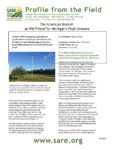
The American Kestrel: an IPM Friend for Michigan’s Fruit Growers
Cherry producers across the region are all too familiar with starlings, finches, voles, pocket gophers, and other animals that can wreak havoc on a cherry orchard by feeding on ripening fruit and developing roots or shoots. These little pests can be a big problem for Michigan’s cherry growers, who grow 75 percent of all tart cherries and 20 percent of sweet cherries in […]

Minnesota Researchers Spill the Beans on Pulses
When the United Nations announced that 2016 would be the “International Year of Pulses,” Craig Sheaffer wasn’t surprised. An agronomist with a bent toward organics, Sheaffer researches perennial native and introduced legumes, grasses, and woody species at the University of Minnesota (U of MN). He was well aware that pulses (also known as grain legumes), such […]
Michigan State Graduate Student Explores the Benefits of Adding Cover Crops to Vegetable Production
Cover crops can help slow erosion, improve soil, smother weeds, enhance nutrient and moisture availability, help control many pests, and bring a host of other benefits to farms across the country. Cereal-legume cover crop mixtures are of particular interest to growers because they can effectively suppress weeds, control erosion, and scavenge leachable nitrate while also […]
Producers and Researchers Collaborate to Improve Soil Health in North Dakota
Soil—and whole farms—have been renewed through soil-improving practices like cover crops and no till. In the semiarid plains of western North Dakota, a team of producers and researchers are working to boost soil health for improved yield stability, farm income, and natural resource health of farms. The Southwest North Dakota Soil Health Project is a […]
Handbook for Agroforestry Planning and Design
The steps provided in the Handbook for Agroforestry Planning and Design will allow you to identify what agroforestry products can grow on your land, which of these products you can sell profitably, and how to develop basic business and marketing strategies.
Training Manual for Applied Agroforestry Practices
The Training Manual for Applied Agroforestry Practices helps to explain agroforestry practices and their applications. It is designed for natural resources professionals and landowners, and includes worksheets and exercises for use as an educational tool. Additionally, the manual is designed to assist in the decision process so that, when established or managed, the agroforestry practice is most effective at achieving the desired objectives.
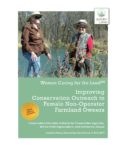
Women Caring for the Land: Improving Conservation Outreach to Female Non-Operator Farmland Owners Curriculum Manual
With the help of an NCR-SARE Research and Education Grant and funding from other sources, WFAN developed an award winning curriculum called Women Caring for the LandSM (WCL), which is designed to serve female non-operator landowners who are interested in learning more about conservation and other land management topics. The materials are also appropriate to teach youth about sustainable agriculture through hands-on conservation activity lesson plans.
Maintenance of Natural Sustainable Riparian Communities Fact Sheets Series
A graduate student from North Dakota State University created these five extension fact sheets after monitoring and reporting on the riparian ecosystem associated with the Middle Sheyenne River, a perennial stream in eastern North Dakota.
Woodchip Bioreactors for Nitrate in Agricultural Drainage
Woodchip bioreactors, installed at the edge of agricultural fields, can remove 15 to 60 percent of the nitrate in tile-drained water annually. This innovative approach for protecting the water quality in Midwest streams and rivers is described in a new fact sheet available from Iowa State University.
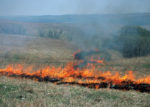
Patch Burning for Cattle and Prairie: Doing Well by Doing Good
Kansas rancher Jane Koger, who raises 125 head annually in a cow/calf herd, is trying an ambitious new strategy to protect the rare prairie ecosystem on her ranch. The resulting "patch burning" system she developed with conservation organizations, along with help from a SARE grant and her Natural Resources Conservation Service (NRCS) field office, seems […]