Showing 1-20 of 24 results
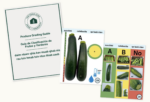
Visual Grading Guide for Produce
Wholesale buyers expect consistent quality, but clear grading standards are surprisingly hard for local producers to find. Without visual benchmarks, many farmers learn through trial and error, leading to unexpected rejections and lost income on delivery day. To address this problem, regional food hub The Good Acre in Saint Paul, Minnesota, developed the Produce Grading […]

Diversifying Vegetable Production and Sales with Chicory Crops
Waxwing Farm in has been growing and evaluating the feasibility of radicchio and endive as season extension crops in Minnesota.
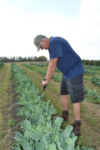
Breaking the Cycle: Tackling Thistle and Compaction with No-Till
Sandy and Lonny Dietz used a SARE grant to identify which no-till methods could best support their diverse, organic vegetable operation.
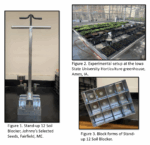
Research Unearths Information about Soil Blocks
A team in Iowa explored an innovative way for farmers to reduce the need for plastic trays by creating planting media in a compressed block.

Raising Brix to Beat the Bugs: An Organic Strategy for Grasshopper Control
North Dakota farmer Glendon Philbrick is working to increase Brix levels—the sugar content in plant sap—as a strategy for managing grasshoppers.
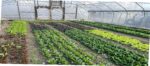
Winter High Tunnel Salad Mix Varieties Tested
Franklinton Farms tested different types of salad and lettuce greens to see which grew best in their high tunnel in Ohio. The goal was to find top performers for small-scale growers.
The New Growers’ Guide to Producing Organic Food-Grade Grains in The Upper Midwest
This guide is intended for farmers interested in adding food-grade grains to their rotations, whether they are new to farming, or interested in incorporating these grains into an existing commodity grain, diversified vegetable, or livestock operation.
Pollinator-Friendly Cover Cropping for Vegetable Producers in the Upper Midwest
Growers are increasingly interested in adding cover crops to rotations to improve soil health, break disease cycles, and provide ecosystem services. In addition to these benefits, cover crops present an opportunity to add crucial floral resources and habitat for pollinators and other beneficial insects on the farm. However, identifying appropriate cover crop species and management […]
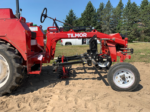
Physical Weed Control Strategies for Midwest Vegetable Growers
A group of farmers and researchers has been working to generate useful, farm-tested, and detailed observations on the best methods and tools for managing in-row weeds. This image is a Tilmor cultivating tractor with finger-weeders belly mounted.
High Tunnel Cucumber Production Guide
This cucumber production guide provides resources and recommendations tailored to the distinctive growing environment of high tunnels.
Using Cover Crops to Reduce Plasticulture
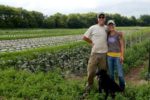
Dana and Karin Jokela are working to reduce their use of plasticulture with cover crops.

Development of a Cooperative Food Distribution Model for Small Farms
Monica Bongue owns Muddy Fork Farm in Wooster Ohio, a certified organic farm for over 15 years, where she produces vegetables, chickens, ducks, sheep, and goats. She wanted to expand her marketing which consisted of direct sales through farmers’ markets and a small, on-farm CSA. Along with a number of other small, local producers, Bongue […]
Green Tools: Improving Sustainability by Integrating New In-Row Cultivation Equipment and Competitive Cultivars
Several states across the North Central region including Illinois, Indiana, Iowa, Michigan, Minnesota, Missouri, Ohio, and Wisconsin are commonly referred to as the “corn belt” due to the vast amounts of corn they produce, but did you know that Michigan, Minnesota, and Wisconsin are among the top ten vegetable-producing states in the country (USDA-NASS 2018)? […]
Cover Crop-based Reduced Tillage for Fall Production of Cabbage,Cauliflower and Broccoli Using a Roller-Crimper and No-Till Planting Aid
Cover crops can reduce erosion, improve soil health, slow weeds, enhance nutrient and moisture availability, control pests, and offer other benefits to vegetable producers. After vegetable grower, Thomas Ruggieri, planted cover crops on his farm in rural Clay County, Missouri in 2004, he noticed dramatic improvement in soil fertility and plant health. Ruggieri and Rebecca […]
Development of Cost and Labor Effective Produce Sanitation Methods for Small Farms
With programs like Good Agricultural Practices (GAP), Good Handling Practices (GHP), and the Food Safety Modernization Act (FSMA), producers have a more proactive role in minimizing food safety hazards potentially associated with fresh produce. Cucumber producer Carloyn Orr says increasingly, local grocery stores are requiring wash and sanitizing of produce, regardless of farm size. Orr […]
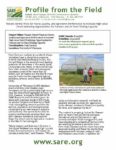
Tomato Variety Trials for Flavor, Quality, and Agronomic Performance
From farmers markets to sandwich shops, tomatoes have a ubiquitous presence in America’s food landscape; in fact, the United States is the second-most leading producer of tomatoes in the world (only China produces more). In terms of annual farm cash receipts, fresh and processed tomatoes account for more than $2 billion, and tomatoes are the […]
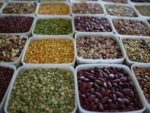
Minnesota Researchers Spill the Beans on Pulses
When the United Nations announced that 2016 would be the “International Year of Pulses,” Craig Sheaffer wasn’t surprised. An agronomist with a bent toward organics, Sheaffer researches perennial native and introduced legumes, grasses, and woody species at the University of Minnesota (U of MN). He was well aware that pulses (also known as grain legumes), such […]
Squash in Sustainable Food Production
Sue Isbell is a 4-H Youth Development Agent with NDSU Extension Service in Sioux County, ND. In 2013, she received an NCR-SARE Youth Educator grant to work with youth from three Tribal communities across North Dakota on activities about sustainable agriculture, local foods, gardening methods, marketing, and concepts and practices of breeding and seed saving. […]
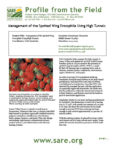
Management of the Spotted Wing Drosophila Using High Tunnels
Scenic Valley Farms is a family owned farm in Rosemount, Minnesota that uses 15 climate controlled high tunnels to produce organically certified tomatoes, peppers, cucumbers, blackberries, strawberries, herbs, ginger, turmeric, and garlic. They also design and manage high tunnels, computerized climate control systems, and subterranean solar thermal heating systems. Erik Gundacker helps manage the high […]

Sustainable Agriculture Learning Modules for High School Agriculture
Established with the aid of a NCR-SARE Professional Development grant, these Sustainable Agriculture Learning Modules from the University of Nebraska-Lincoln were created to offer insight into what sustainability within agriculture actually looks like.