For Midwest strawberry growers, spring frosts and heavy rains can make consistent yields an uphill battle. To find a more reliable path forward, Purdue University researchers received support from an NCR-SARE Research and Education grant to help farmers extend their harvest seasons and cut down on synthetic pesticides.
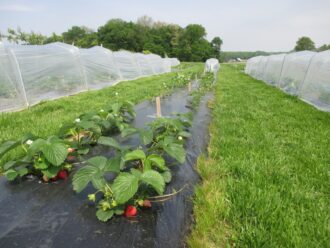
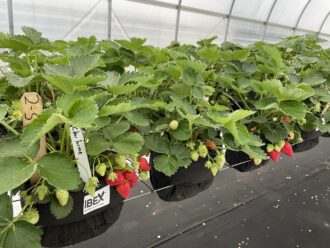
Led by Purdue University extension specialist Wenjing Guan, the team headed to fields across Indiana and Ohio to test three alternatives to traditional matted-row systems: soil-based high tunnels, modified open-field plasticulture, and substrate-based tabletop systems.
Key Findings: High Tunnels
The researchers found that while each system had its merits, soil-based high tunnels and modified plasticulture systems were the most promising for widespread adoption in the lower Midwest. High tunnels acted as a buffer, protecting plants from wind and rain while accumulating heat to accelerate growth. This allowed for an earlier harvest when prices were higher.
The study identified two-spotted spider mites and aphids as the most destructive pests in these protected spaces. The team also documented the emergence of Neopestalotiopsis leaf spot, a disease that can be easily misdiagnosed but significantly impacts plant health.
Recommendations for Growers
Based on the results of the multi-year study, the project team shared several recommendations for farmers looking to transition to tunnel production:
Prioritize Cultivar Selection: Growers should select cultivars based on their specific system, whether seeking early-season “June-bearers” for high tunnels or high-yielding cultivars for extended plasticulture.
Optimize Planting Dates: Timing is critical; the study emphasized that strategic transplanting dates (often in late August or early September) are essential for maximizing yield potential in the following spring in annual plasticulture.
Implement Biological Controls: Because protected spaces can cause pest populations to spike, growers are encouraged to use natural enemies and organic biopesticides to reduce reliance on synthetic chemicals.
Manage Conditions: Growing conditions affect both plant growth and pest activity. Strategically managing conditions by using low tunnels and row covers can enhance yields and reduce pest pressure.
“Since the project began, we have observed growing interest in high tunnel strawberry production, with farmers successfully adopting the system," said Guan. "We think the soil-based high tunnel system has the most significant potential to be adapted by small and diversified farmers in the lower Midwest."

Dig Deeper
Strawberry Chat is a virtual discussion on strawberry production on small, diversified farms in Indiana and neighboring states. The hosts, Wenjing Guan and Miranda Purcell of Purdue University, invite guests to discuss strawberry-related topics and cover different production systems.
URL: https://anchor.fm/strawberrychat
Related Resources
-
 Project Products
Sustainable Strawberry Production Video Series
Project Products
Sustainable Strawberry Production Video Series
-
Fact Sheets
Evaluating Nutrient, Soil Health, and Economic Benefits of Compost Additions to Summer Cover Crops for Strawberries in North Carolina
-
Fact Sheets
Using Low Tunnels to Extend the Growing Season for Organic Strawberries in Alabama
-
Fact Sheets
Strawberries: Season Extension