For strawberry growers in the Midwest, the battle against erratic spring frosts and heavy rains has long made consistent yields a challenge, prompting a search for more reliable production methods.
In a recent North Central SARE project, researchers at Purdue University explored the future of regional berry production by looking beyond traditional matted-row systems. Led by project coordinator Wenjing Guan, the team focused on Indiana and Ohio to determine if tunnel-based systems and plasticulture could stabilize yields and improve profitability for local farmers.
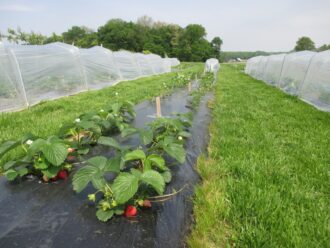
As traditional "matted-row" strawberry systems face increasing risks from extreme heat and late-spring frosts, the research team tested three alternatives: soil-based high tunnels, modified open-field plasticulture, and substrate-based tabletop systems. Their goal was to provide farmers with a roadmap to extend their harvest seasons and reduce their reliance on synthetic pesticides by improving environmental control and implementing integrated pest management (IPM).
Key Findings
The researchers found that while each system had its merits, soil-based high tunnels and modified plasticulture systems were the most promising for widespread adoption in the lower Midwest.
- Climate Protection: High tunnels acted as a vital buffer, protecting plants from wind and rain while accumulating heat to accelerate growth. This allowed for an earlier harvest when market prices are typically higher.
- Pest Challenges: The study identified two-spotted spider mites and aphids as the most destructive pests in these protected environments. The team also documented the emergence of Neopestalotiopsis leaf spot, a disease that can be easily misdiagnosed but significantly impacts plant health.
- System Longevity: By experimenting with mulch colors and specific cultivars, the team demonstrated that plasticulture systems could be successfully extended into a second year of production, offering better returns on initial setup costs.
Recommendations for Growers
Based on the results of the multi-year study, the project team shared several recommendations for farmers looking to transition to tunnel production:
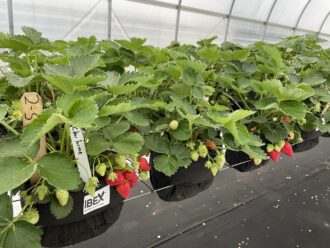
- Prioritize Cultivar Selection: Growers should select cultivars based on their specific system, whether seeking early-season "June-bearers" for high tunnels or high-yielding cultivars for extended plasticulture.
- Optimize Planting Dates: Timing is critical; the study emphasized that strategic transplanting dates (often in late August or early September) are essential for maximizing yield potential in the following spring in annual plasticulture.
- Implement Biological Controls: Because protected environments can cause pest populations to spike, growers are encouraged to use natural enemies and organic biopesticides as part of an IPM plan to reduce reliance on synthetic chemicals.
- Manage weather fluctuations: Weather fluctuations affect both plant growth and pest activity. Strategically using low tunnels and row covers can enhance yields and reduce pest pressure.
"Since the project began, we have observed growing interest in high tunnel strawberry production, with farmers successfully adopting the system," said Guan. "Modified plasticulture has similarly gained traction in the region. Although substrate-based tabletop systems for day-neutral strawberries are appealing, our results indicate that achieving consistently high yields in the lower Midwest requires greenhouses with more advanced environmental controls."
Through field days and new production guides, the project team has already seen a surge of interest. Their work suggests that by moving strawberries under cover, regional growers can secure a more resilient and profitable future for strawberries.

Dig Deeper
Strawberry Chat is a virtual discussion on strawberry production on small, diversified farms in Indiana and neighboring states. The hosts, Wenjing Guan and Miranda Purcell of Purdue University, invite guests to discuss strawberry-related topics and cover different production systems.
URL: https://anchor.fm/strawberrychat