The Challenge
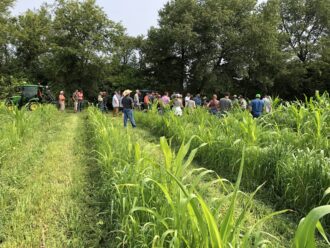
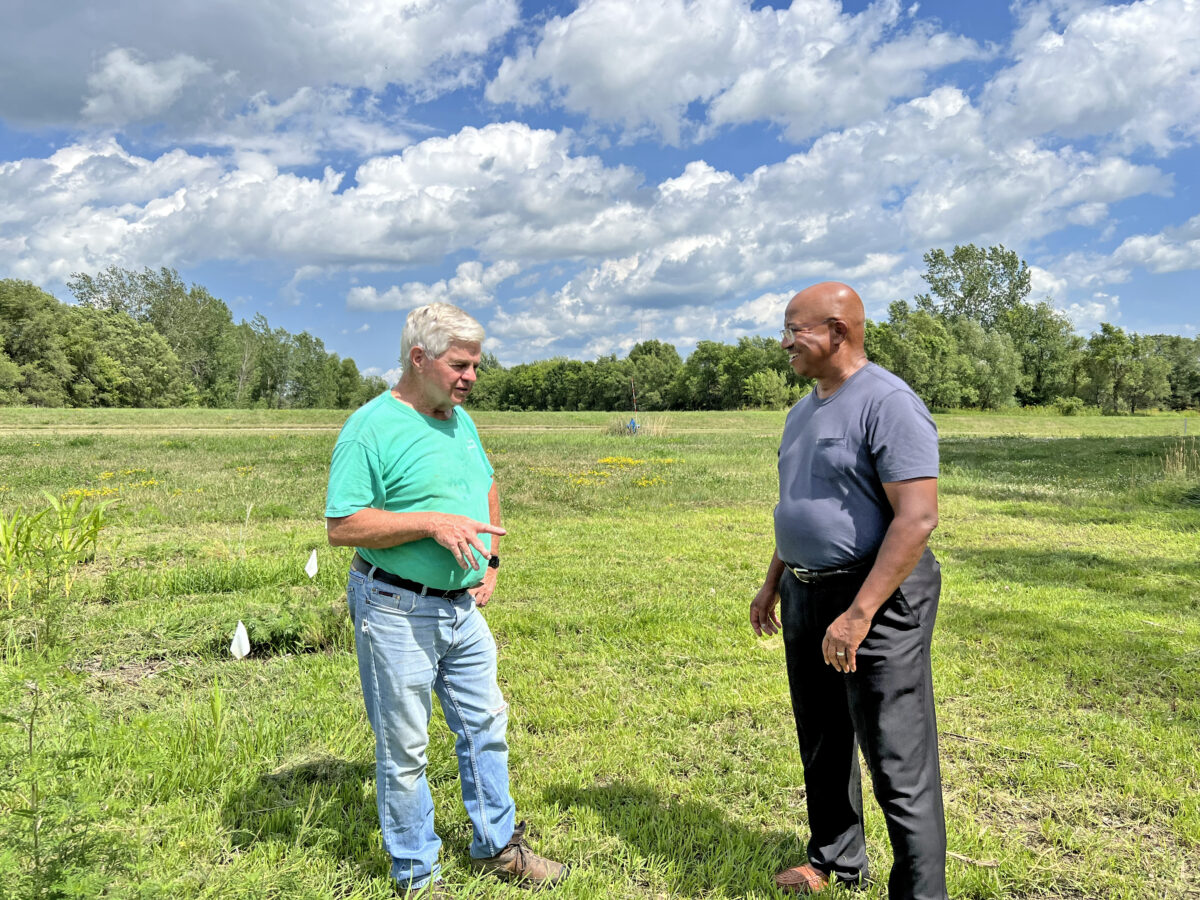
These days, most farmers are familiar with cover crops and their potential value as a management tool. In the right context, cover crops can reduce erosion, suppress weeds, provide nitrogen, improve water retention, or generate revenue as livestock forage. Bob Recker, a farmer and consultant in Iowa, has always been interested in experimenting with practices that depart from the status quo. His primary focus is on exploring how to leverage sunlight to maximize crop yields, and this recently led him to a radical idea: While some farmers already plant cover crops between rows of corn, he wanted to widen the corn rows significantly to open up more sunlight and allow the cover crops to grow more vigorously. The first thought of most farmers might be that wider rows amount to little more than lost yields, but Recker wanted to see the real-world effects this practice could have on profitability, productivity, and soil health.
The Actions Taken
Recker received two NCR-SARE grants to experiment with fields of corn planted in 60- and 90-inch rows, compared with standard fields with 30-inch rows. He collaborated with three farmers near Waterloo, Iowa. On each participating farm, they evaluated a variety of inter-row plantings, including a simple cover-crop species that a beginner might start with and a more diverse cover-crop mix for more experienced farmers. Each farmer included an additional treatment tailored to their own interests. For example, one farmer might use vigorous cover-crop growth to focus on building soil health or to support the transition to organic, while another might graze the cover crop after harvest to offset yield losses and boost profitability. Another way to improve profitability could be to include a vegetable crop and a cover crop. In the treatment plots, Recker increased the number of plants per row so that the number of plants per acre was consistent across all plots. On all of the farms, he tracked plant growth through the season, weed suppression, biomass, runoff, and yield.
The Impacts
Some treatments resulted in surprisingly impressive–but still slightly lower–corn yields, plus other benefits. But, Recker admits that a farmer should only explore this practice if they have a clear goal for doing it, until more is learned about it. Specific impacts include:
- On one farm, the plot with 60-inch rows had 56% less water runoff during rain events.
- In just one season, Recker recorded organic matter increases of 0.2% and 0.3%, which exceeded his expectations.
- In one year, a participating farmer's corn crop failed due to drought, but he still earned a profit from his treatment field because he had planted turnips there, which he sold at a local farmers' market.
There are a number of growers and landowners who have taken a great interest in my work. It is intriguing to them because it is so different from their traditional practices. - Bob Recker, Cedar Valley Innovation