Curriculum Brings Sustainable Pasture Practices to High School Classrooms
Supported by a SARE Youth Educator Grant, Iowa State University educators created "Paddocks, Pastures, and People." This curriculum teaches Midwest high school students the basics of sustainable pasture management.
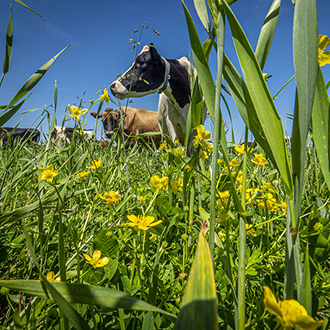
Pastures, which are lands planted with grasses and legumes for grazing livestock, play a crucial role in agricultural operations. By using practices such as rotational grazing, planting a variety of native species, and incorporating trees for shade and wind protection, farmers and ranchers can boost production on their existing land. These practices also help reduce soil erosion, protect local streams, support native pollinators, and improve overall soil health.
The Curriculum
The "Paddocks, Pastures, and People" curriculum simplifies complex ecological and agricultural concepts into a flexible, one-hour core lesson that is ideal for high school class schedules.
- 30 Minutes on Plants: Understanding forage diversity, root structures, and soil preservation.
- 30 Minutes on Animals: Examining livestock grazing habits, pasture rotation schedules, and animal welfare.
This lesson plan was developed by Maya Hayslett from Iowa State University’s Integrated Pest Management and 4-H Youth Development programs, along with Dr. Amy Powell from Iowa State University’s Animal Science and 4-H Youth Development. The plans include comprehensive background materials for educators, ensuring that instructors do not need prior experience in agronomy or livestock management to teach the content successfully.
Want more information? See the related SARE grant:
- Paddocks, Pastures and People (YENC18-125)
This material is based upon work that is supported by the National Institute of Food and Agriculture, U.S. Department of Agriculture through the Sustainable Agriculture Research and Education (SARE) program. Any opinions, findings, conclusions, or recommendations expressed in this publication are those of the author(s) and should not be construed to represent any official USDA or U.S. Government determination or policy.