A Guide for Shepherd and Tree Grower Success
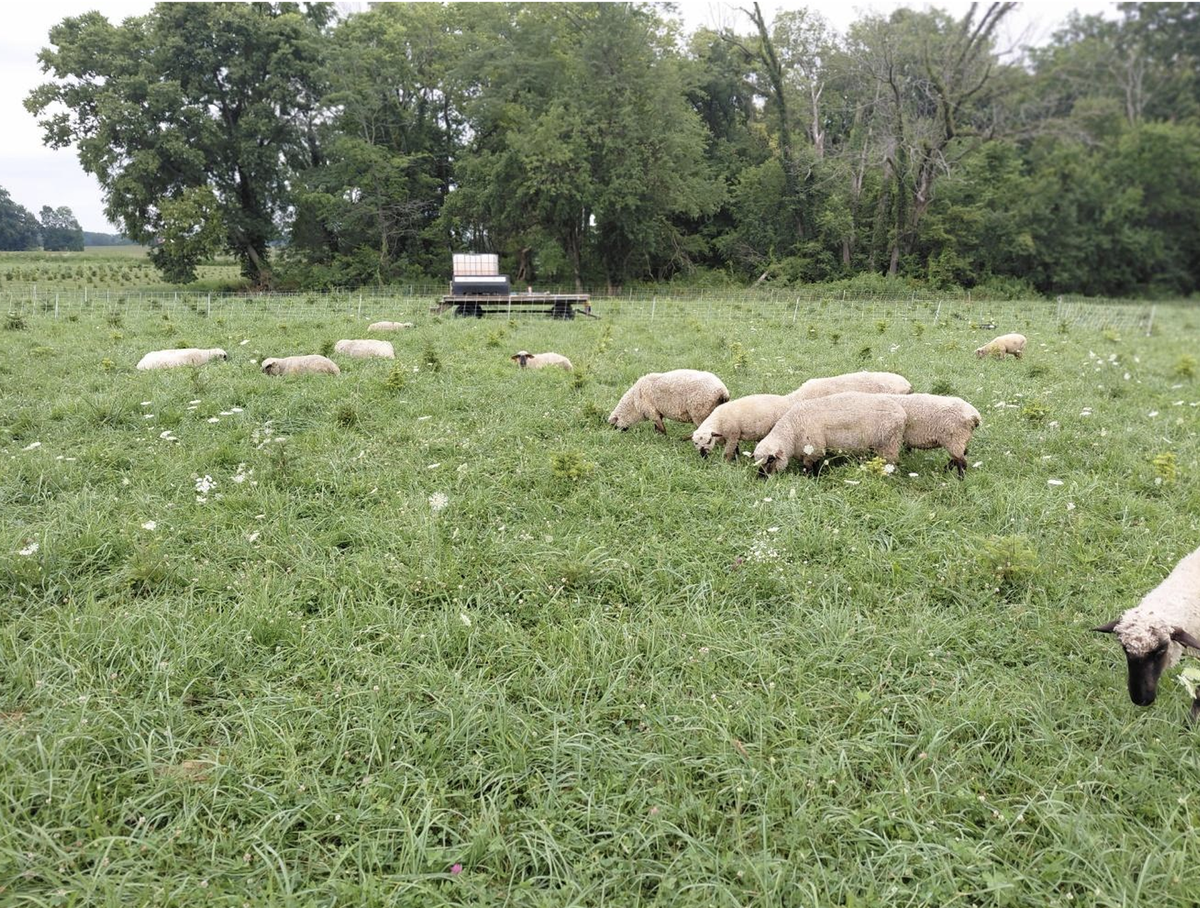
Intercropping, raising two or more agricultural commodities on the same acreage, is gaining traction among producers seeking to optimize land use, suppress weeds naturally, and diversify farm income. In Europe, Shropshire sheep have long been used for biological weed control in orchards, vineyards, and conifer plantations because they naturally graze ground cover while ignoring woody plants.
With support from an NCR-SARE Farmer Rancher grant, Michigan growers Jeff and Elise Koning tested whether this integrated system could succeed on their Christmas tree operation. Their project evaluated grazing dynamics across four common fir varieties:
- Canaan fir (Abies balsamea var. phanerolepis)
- Concolor fir (Abies concolor)
- Korean balsam fir (Abies koreana × balsamea)
- Turkish fir (Abies bornmuelleriana)
"In July, the sheep were essential for weed control," Elise Koning recalled. "Our primary lawnmower went out of commission—first the tensioner, then a belt, then a pulley broke. It was in the shop for three weeks, and our backup mower failed at the same time. Renting replacement equipment wasn't cost-effective, but fortunately, we had the sheep."
The Value of Biological Weed Control
The practical benefits of living lawnmowers became crystal clear during a summer equipment breakdown on the Koning farm.
By rotationally grazing the flock through the tree blocks, the sheep kept competitive grasses and broadleaf weeds managed while lying in the shade between runs. When the mechanical mower finally returned from the shop, clearing the remaining growth around the base of the trees was significantly faster and easier.
Genetics Matter
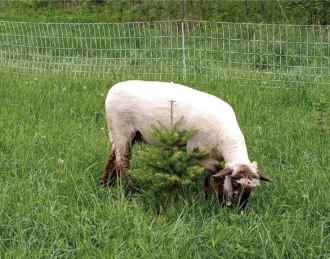
While the trial confirmed that sheep effectively suppress competing vegetation, it highlighted a critical management rule: flock genetics matter.
- Purebred Shropshires: Safely grazed forage around the firs without damaging lower branches.
- Crossbred Lambs: Chewed directly on young fir needles, leading to tree damage.
To maintain tree quality, producers should ensure they introduce only purebred Shropshire genetics into conifer stands.
Producer Guidelines for Custom Grazing
The Konings pointed out that growers do not need to own livestock to adopt this practice; collaborating with an experienced custom grazier is a practical alternative. When introducing sheep to a tree plantation, they recommend considering the following management practices:
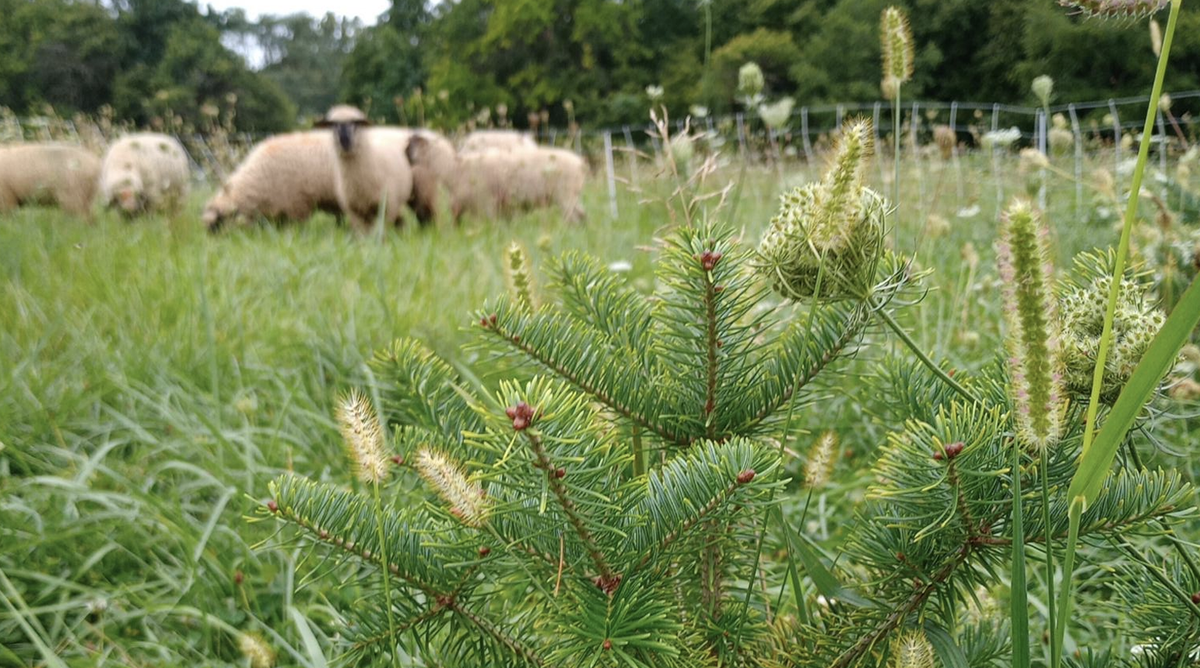
- Forage & Water Management: Ensure that the sheep have reliable water access throughout the block. Planting cover crops between the tree rows can enhance forage quality.
- Infrastructure Protection: Verify that drip or overhead irrigation lines are durable enough to handle hoof traffic without puncturing.
- Operations & Timing: Stay in close communication with the shepherd to coordinate tasks. Move sheep away from active working zones during tree shearing.
- Monitoring & Feedback: Document grazing impacts with before-and-after photos, and monitor closely to prevent overgrazing and tree damage.
Producer Resources & Adaptability
To help other growers implement integrated sheep-conifer systems, the Konings authored a practical guide tailored for both established tree growers and livestock producers seeking grazing access. Their observations and recommendations provide a baseline for implementing weed control in Christmas tree plantations with Shropshire sheep. They note that each site may require modifications based on climate, soil type, ground cover, equipment availability, or other factors.

Want more information? See the related SARE grant:
This material is based upon work that is supported by the National Institute of Food and Agriculture, U.S. Department of Agriculture through the Sustainable Agriculture Research and Education (SARE) program. Any opinions, findings, conclusions, or recommendations expressed in this publication are those of the author(s) and should not be construed to represent any official USDA or U.S. Government determination or policy.