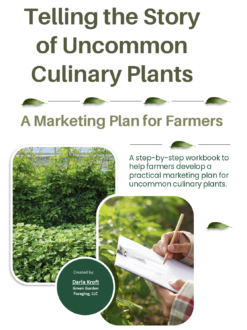
If you've ever stood at a farmers market booth trying to explain to a skeptical customer what a sunchoke is or how to cook amaranth, you know that selling "uncommon" culinary crops can be tricky.
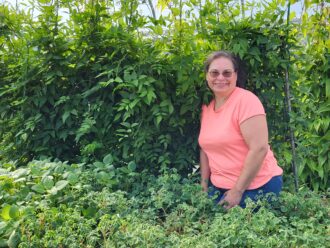
A new, comprehensive workbook by Darla Kroft of Green Garden Foraging in Michigan titled "Telling the Story of Uncommon Culinary Plants," aims to help farmers bridge that gap. Created with support from an NCR-SARE Farmer Rancher grant, the guide provides a practical, step-by-step roadmap for marketing edible plants with low public awareness or a limited presence in mainstream markets.
Beyond the Staple Veggies
Marketing staples like peppers and basil often focus on price, convenience, and familiarity. However, the guide suggests that uncommon culinary plants such as purslane, American groundnuts, and heritage greens require a strategy grounded in education, intentional storytelling, and targeted outreach.
To succeed, the workbook makes suggestions for farmers, such as:
- Invite curiosity by encouraging customers to explore and taste new things.
- Demystify the unknown through clear education on flavor profiles and preparation.
- Connect by sharing the story and history of the plants.
What's Inside the Workbook?
The guide is designed as a hands-on tool rather than an academic exercise. It features fill-in-the-blank worksheets and "Side-by-Side" comparisons that contrast marketing strategies for common versus uncommon crops. Key sections include:
- Market Research: Tips for observing real-world behaviors at markets and restaurants to see what "unusual" ingredients are gaining traction.
- Unique Value Proposition (UVP): Helping farmers define why their specific crops are a "must-have," focusing on benefits like greater ecological resilience or unique flavor discoveries.
- Marketing Channels: A deep dive into how to use social media, recipe cards, and farmers market booth design to reach home cooks and chefs.
- Pricing & Budgeting: Guidance on setting price tiers that reflect the story and rarity of the crop while ensuring the farm remains profitable.
One of the guide's central themes is that uniqueness alone isn't enough to sustain a business.
"Uniqueness might spark a one-time purchase," says Kroft, "but repeat sales only happen when the customer appreciates the plant's usefulness".
Getting Started
The workbook is designed to be flexible. Farmers can work through it section by section or focus on specific needs, such as branding or budgeting. By the end of the process, producers should have a clear, professional marketing plan that can be integrated directly into their overall business strategy.
For farmers looking to turn "What is this?" into "I'll take two bunches," this guide offers the tools to tell a more compelling story.
"There is indeed a place for uncommon culinary plants in the marketplace, but a farmer has to approach the marketing of uncommon culinary plants differently than common culinary plants," said Kroft. "Since many farmers appeared to be adding uncommon culinary plants to their common culinary plant offering, the findings of this project show a strategic way to do this."
Want more information? See the related SARE grant:
This material is based upon work that is supported by the National Institute of Food and Agriculture, U.S. Department of Agriculture through the Sustainable Agriculture Research and Education (SARE) program. Any opinions, findings, conclusions, or recommendations expressed in this publication are those of the author(s) and should not be construed to represent any official USDA or U.S. Government determination or policy.