
The Challenge
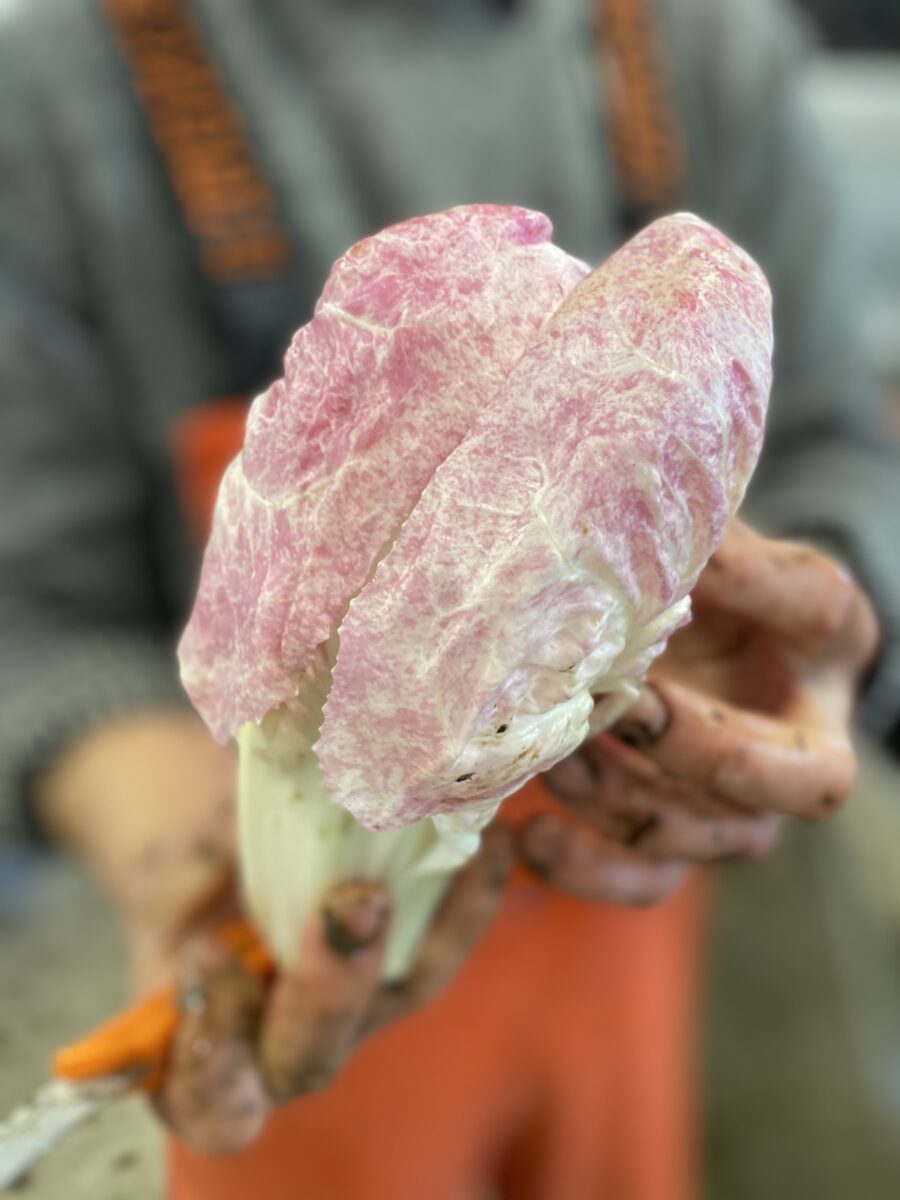
Anna Racer and Peter Skold are full-time farmers at their 40-acre Waxwing Farm in Webster, Minn. In 2020, they had 3–5 seasonal employees, but their long-term goal was to grow the business enough to support one full-time employee instead. One way they could increase revenue was to expand winter sales. Many small-scale vegetable farmers use high tunnels for season extension and winter sales, but Racer and Skold decided to explore a different strategy. They looked into growing less common chicory crops–Belgian endives and radicchio–that are of interest to high-end restaurants and other specialty markets. Chicory crops are grown in the field and must undergo a period of “forcing” after they're harvested in the fall, during which they continue to grow in a dark environment so their color turns white and their flavor intensifies. These crops wouldn't take up space in a high tunnel because they're grown in a field and forced in a separate location, meaning they could provide a unique winter marketing opportunity in addition to high-tunnel production.
The Actions Taken
Racer and Skold used an NCR-SARE Farmer Rancher grant to evaluate the feasibility of growing both Belgian endives and radicchio in Minnesota's climate, and to compare different techniques for harvesting and forcing them in a cold-storage facility. Other goals included assessing the sales potential and profitability of these specialty crops and sharing their findings with other farmers in the area. To reduce labor costs, Racer and Skold used mechanical planting and harvesting techniques instead of manual ones. After harvest, endives can be forced in a medium of either peat moss or sand. The traditional method of forcing radicchio is to put it in a temperature-controlled hydroponic system, which Racer and Skold set up using water tanks, a simple recirculation pump, and an aquarium heater. They worked with their existing restaurant partners to explore the general appeal, sales volume, and pricing of these crops.
The Impacts
Ultimately, Racer and Skold learned enough about the production and sales of chicory crops that they plan to develop the radicchio market and include it in their winter crop planning. Specific impacts include:
- Racer and Skold learned that direct seeding, rather than transplanting, along with proper harvest techniques, resulted in better root systems and greater success during the forcing period.
- They found that endives can also be grown successfully in the Midwest, but at a lower sales price. Because endives are more familiar than radicchio, they have a larger established market and thus can be grown on a larger scale. But Racer and Skold chose not to pursue endives due to scale constraints on their farm.
We learned that these crops can be successfully grown in this part of the country and have the potential to be valuable additions to any vegetable farm’s mix of winter crop. - Peter Skold, Waxwing Farm