Showing 21-40 of 40 results
Economics of Grazing and Haying Cover Crops in North Central Kansas
Grown on an estimated 10 million acres across the country, cover crops are becoming an indispensable part of crop rotations. To maintain this momentum, the development of reliable information at the local level—how to craft a diversified rotation that pays—needs to keep pace with growth in farmers’ interest. That is what motivated Josh Roe to […]
Beekeeping
Beekeepers are stewards of an essential resource; the plants that bees pollinate constitute more than 30 percent of the food we eat and the beverages we drink. While the role of alternative pollinators is vital, bees continue to provide an important service to agriculture in our region. From research projects about Colony Collapse Disorder, to educational programs around beekeeping, to innovative hive designs, NCR-SARE has funded a wide variety of grants to help beekeepers.
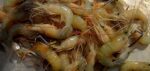
Producer Raises Prawns for Ohio Locavores
With support from SARE, Don Mahoney is making freshwater prawn production more sustainable in Ohio.
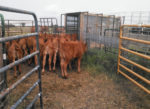
South Dakota Rancher Explores Sustainable Livestock Fly Control
Linda Simmons is a cattle rancher in Twin Brooks, South Dakota. Beef and sheep producers in northeastern South Dakota depend largely on native rangeland, and there are several species of flies that can cause serious economic losses there. Several years ago, Simmons experienced a failure with her feed-through insecticide plan. “We had a terrible incident of […]
Big Bluestem Management Using High Density/Short Duration Grazing
Big Bluestem is a warm season, perennial bunchgrass with blue-green stems four to eight feet tall. It has been referred to as “ice cream for cows.” Leslea and Brad Hodgson own and operate Root Prairie Galloways, where they raise Galloway beef cows and have big bluestem pastures that they want to protect from the encroachment […]
Confinement Building Redesign Sheds ‘Sunlight’ on Animal Welfare
Paul Sobocinski has a 240 acre crop and livestock farm that includes hogs and cattle. In 2001, he received a SARE grant for the conversion of an existing pole barn to a deep bedded sow and piglet nursery. In 2012 he received a second NCR-SARE Farmer Rancher grant for $7,450 to renovate an existing 24 […]
Making Goats Milk Soap Business Sustainable by Implementing Standard Manufacturing and Testing Protocols
Penny and Jay Adler own and operate the 444Farm in Hazel, South Dakota. They have 40 acres (half in wetlands) where they have implemented sustainable grazing practices by replacing water systems, re-sowing pastures, installing high tensile fences, and creating paddocks for rotational grazing. They raise dairy goats and make goat’s milk soap and lotion. They […]
Developing a Mob Grazing System to Improve the Sustainability and Profitability of a Cattle Operation in North Dakota
Jeremiah and Krista Reiser run an all grass operation on 2,700 acres of native prairie in central North Dakota. They run a herd of leased and owned spring calving cows and also custom graze the excess grass that is not planned for their own herd. In 2010, they received a $5,991 NCR-SARE Farmer Rancher Grant […]
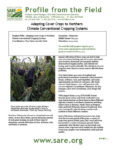
Adapting Cover Crops to Northern Climate Conventional Cropping Systems
Northeast Minnesota is home to a large beef cow-calf sector, several dairy farms, and an increasing amount of cash grain farming. In each of these types of operations, annual cultivation of corn, soybeans, oats, and barley is common. Annual cultivation of these crops can lead to high rates of nutrient leaching and soil erosion, decreased […]
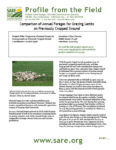
Comparison of Annual Forages for Grazing Lambs on Previously Cropped Ground
Michael Seipel, his wife, and three children raise livestock on pasture in northeast Missouri. Michael also teaches agricultural business and sustainable agriculture courses at Truman State University. In 2013, Michael Seipel received an NCR-SARE Farmer Rancher grant to look at the economics of grazing lambs on spring, summer, and winter annual forage crops as compared […]
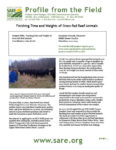
Finishing Time and Weights of Grass-fed Beef Animals
For more than 20 years, Jane Jewett has owned WillowSedge Farm near Palisade, Minneosta. She and her family raise and direct-market pork, poultry, lamb, and grass-fed beef on 113 acres. An increasing interest in grass-fed beef operations led Jewett to make the transition to grass-fed beef in 2008. Her interest in applying for an NCR-SARE […]
Managing Drought Risk On the Ranch
Producers throughout the nation continue to grow increasingly concerned about water scarcity. Farmers, ranchers, and agricultural educators are exploring new approaches to the challenges associated with water shortage and drought. The National Drought Mitigation Center, (NDMC) based in Lincoln, NE, has a mission of “helping people and institutions develop and implement measures to reduce societal […]
Profitable Rabbit Production
Rabbit meat is high in protein and low in fat, cholesterol, and sodium when compared to most of the meats eaten in the U.S. Rabbit meat has great potential to feed people in developing countries and could be promoted in the U.S. as a healthful, natural meat and a small farm asset (Fanatico, Anne. “Rabbit […]
Toward a Sustainable Agriculture: A Curriculum for High School Classes
This free high-school curriculum addresses the social, environmental and economic impacts of agriculture. The curriculum provides a critical analysis of agricultural and food systems, and helps students understand new concepts through hands-on examples. The curriculum includes six modules, designed to be incorporated into existing classes.
Julie Engel and her Sustainable System for Raising Rabbits on Pasture
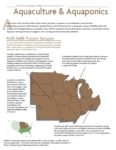
Aquaculture and Aquaponics
Aquaculture is the cultivation of fish, aquatic animals, and plants. Aquaponics is a bio-integrated system that links recirculating aquaculture with hydroponic vegetable, flower, and/or herb production. In aquaponics, nutrient-rich effluent from fish tanks is used to fertigate hydroponic production beds. SARE has supported advances by producers, researchers, and educators that are helping to advance aquaculture and aquaponics into working models of sustainable production.
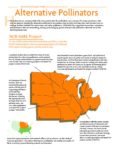
Alternative Pollinators
Honeybee losses compounded with rising rental rates for pollination are a concern for many producers. Not only are growers looking for alternative pollinators to improve crop security, but they also want to learn how to manage on-farm habitats for native bees and other pollinators. NCR-SARE has supported researchers, educators, and producers who are researching, rearing, and managing species that provide pollination alternatives to the declining honey bee.
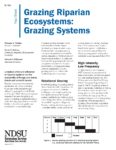
Maintenance of Natural Sustainable Riparian Communities Fact Sheets Series
A graduate student from North Dakota State University created these five extension fact sheets after monitoring and reporting on the riparian ecosystem associated with the Middle Sheyenne River, a perennial stream in eastern North Dakota.
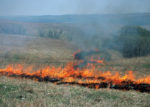
Patch Burning for Cattle and Prairie: Doing Well by Doing Good
Kansas rancher Jane Koger, who raises 125 head annually in a cow/calf herd, is trying an ambitious new strategy to protect the rare prairie ecosystem on her ranch. The resulting "patch burning" system she developed with conservation organizations, along with help from a SARE grant and her Natural Resources Conservation Service (NRCS) field office, seems […]
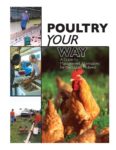
Poultry Your Way
Poultry Your Way is for anyone interested in commercially raising, processing, and marketing poultry. It is designed to help you consider alternatives, and to help you make decisions about which alternative(s) will be most compatible with your family and business goals.