Showing 81-100 of 307 results

Agricultural Justice Project Toolkit
The Agricultural Justice Project (AJP) Toolkit provides comprehensive guidance and resources for building fair and accountable businesses and workplaces that support workers, small-scale farmers, and communities.

SARE's Food Loss and Waste Projects
Organizations across the food supply chain received funding to tackle food waste and educate diverse audiences on reduction strategies.

Less Food Waste, More Family Meals: Encouraging Shared Mealtime in Missouri
This SARE project in Kansas City aims to double prepared food donations from the food service sector, validating ReFED data and creating a playbook to help other cities turn surplus food into meals for families.

Reducing Food Waste and Enhancing Specialty Crop Farm Viability in Minnesota
The Good Acre is tackling food waste with farmer support, buyer education, and a 'seconds' market—boosting food access and helping small produce farms thrive.

Milk Waste Reduction Strategies in Childcare Centers in Illinois
Over 66% of U.S. preschoolers attend childcare daily, but up to 40% of milk served is wasted. A new study in Illinois childcare centers aims to reduce this waste through the CACFP program.
Good Food Belongs to the People of Southwest Ohio
Last Mile in Ohio rescues fresh food to fight waste and feed those in need, aiming to save 6 million pounds annually while raising regional awareness on food waste prevention.

Video Series Highlights How Different Field Practices Impact Moisture and Temperature
Researchers at Ohio State University conducted a multi-year study using soil moisture and temperature sensors to compare the effects of conventional tillage, no-till, and no-till with cover crops on field conditions.

NCR-SARE's 2024 Professional Development Awards
For the 2024 Professional Development Program, NCR-SARE awarded more than $1.29 million to 11 projects.
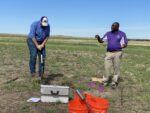
Producer Partnerships Demonstrate the Benefits of Integrated Systems: Increased Profits and Soil Health
A recent North Central SARE Research and Education grant in Kansas demonstrated how integrating crops, livestock and cover crops could help some producers offset revenue loss and failing crops.

NCR-SARE's 2024 Graduate Student Grants
Twenty-two projects were awarded more than $414,000 through this NCR-SARE grant program which funds graduate student projects that address sustainable agriculture issues.

Apply for a 2025 Farmer Rancher Grant
Proposals are due by 4pm Central Time on December 5, 2024.

Apply for a 2025 Youth Educator Grant
Proposals are due by 4:00 p.m. Central Time on Thursday, November 7, 2024.
NCR-SARE's 2024 Farmer Rancher Grants
More than $784,000 was awarded to 43 projects for this competitive grant program for farmers and ranchers.

PRAIRIE Inspires Youth with Multicultural Food Pathway Program
In the heart of Minnesota's vibrant Red River Valley, the nonprofit organization PRAIRIE is leading the charge in nurturing the next generation of small-scale farmers. Verna Kragnes and Rick Hall founded PRAIRIE, short for Prairie Rose Agricultural Institute for Research, Innovation & Education, which has become a beacon of opportunity for aspiring farmers. Offering a […]
NCR-SARE's 2024 Youth Educator Grants
NCR-SARE awarded more than $210,000 to 19 projects for the 2024 Youth Educator Grant Program.

Joan Benjamin Announces Retirement
Joan Benjamin has announced her retirement.
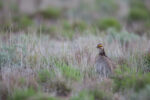
Shedding Light on Ranchers’ Views of Grassland Conservation Payments in Nebraska
University of Nebraska doctoral candidate Kyle Martens found many ranchers are willing to use grazing practices that promote biodiversity.

Bringing Nutritious Options to Food Deserts in Indiana
Legacy Taste of the Garden is a farm outside of Lyle's Station, Indiana that provides education and outreach to BIPOC producers across Indiana.

NCR-SARE Welcomes New Associate Director
NCR-SARE is pleased to announce Betsy Wieland's appointment as the new Associate Director.
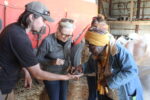
The New Growers’ Guide to Producing Organic Food-Grade Grains in The Upper Midwest
This guide is intended for farmers interested in adding food-grade grains to their rotations, whether they are new to farming, or interested in incorporating these grains into an existing commodity grain, diversified vegetable, or livestock operation.