Showing 221-240 of 304 results

Margaret Krome: NCR-SARE Hero
Read more about Margaret Krome.

Ferd Hoefner: NCR-SARE Hero
Read more about Ferd Hoefner.
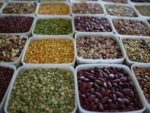
Minnesota Researchers Spill the Beans on Pulses
When the United Nations announced that 2016 would be the “International Year of Pulses,” Craig Sheaffer wasn’t surprised. An agronomist with a bent toward organics, Sheaffer researches perennial native and introduced legumes, grasses, and woody species at the University of Minnesota (U of MN). He was well aware that pulses (also known as grain legumes), such […]
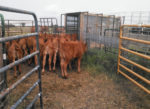
South Dakota Rancher Explores Sustainable Livestock Fly Control
Linda Simmons is a cattle rancher in Twin Brooks, South Dakota. Beef and sheep producers in northeastern South Dakota depend largely on native rangeland, and there are several species of flies that can cause serious economic losses there. Several years ago, Simmons experienced a failure with her feed-through insecticide plan. “We had a terrible incident of […]
Cover Crop Termination
Farmers use cover crops to slow erosion, improve soil health, enhance water availability, smother weeds, help control pests and diseases, and increase biodiversity on their farms. Although cover crops can be partially grazed or used as forage, they are usually terminated before planting production crops. While row crop producers tend to prefer using herbicides to terminate, most vegetable/horticulture crop producers employ tillage as their primary means of termination. Some organic no-till producers use roller-crimpers to kill the cover crop and leave the mulch on the soil surface to conserve water. NCR-SARE has supported various research projects that have explored the advantages and limits of various cover crop termination strategies.
Biochar
Black carbon produced from wood chips, plant residues, manure or other agricultural waste products is known as biochar. When utilized correctly, biochar can help increase soil carbon, revitalize nutrient impoverished soils, and boost plant productivity. NCR-SARE has funded several research projects that have examined at how biochar interacts with soil and crops in order to maximize its potential benefits.
Food Safety
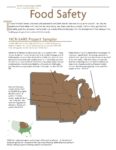
To keep food safe, farmers, processors, and aggregation and distribution facilities need to stay up-to-date with new rules and regulations on food safety. As farmers and ranchers produce, pack, handle and store our food, NCR-SARE has supported their food safety goals through research and education on a variety of food safety topics, from the development of food safety plans to building good agricultural practices (GAPs) networks.
Permaculture
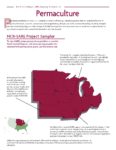
Permaculture practitioners strive to build sustainable and self-sufficient agricultural ecosystems that are modelled after natural ecosystems. Permaculture can include concepts such as agroforestry, silvopasture, no-till, rainwater harvesting, mulching, managed intensive rotational grazing, and keyline design. NCR-SARE has supported work in permaculture as practitioners explore biodiverse agricultural ecosystems that sustain both themselves and their stewards.
Adjusting your Farm Plan to Avoid the Bumps in the Road
The Sustainable Farming Association of Minnesota (SFA) supports the development and enhancement of sustainable farming systems through farmer-to-farmer networking, innovation, demonstration, and education. In 2012, SFA received a $165,294 NCR-SARE Research and Education grant to work on two programs, Adjust 2015 and the New Farm Reality Check™. Through paid surveys and interviews with beginning farmers, […]
Big Bluestem Management Using High Density/Short Duration Grazing
Big Bluestem is a warm season, perennial bunchgrass with blue-green stems four to eight feet tall. It has been referred to as “ice cream for cows.” Leslea and Brad Hodgson own and operate Root Prairie Galloways, where they raise Galloway beef cows and have big bluestem pastures that they want to protect from the encroachment […]
Utilizing Cover Crops to Increase Productivity, Health and Vigor on Tame Grass Pasture
Donnie Feiring owns and operates Feiring’s Cattle Co. in Beach, ND, a 120-head registered Black Angus cow calf operation. They also run 35 head of commercial yearling heifers. Feiring wanted to improve the health, vigor and productivity of 50 acres of tame grass pasture - tame pastures are cultivated fields planted with introduced (non-native) grass […]
Mob Grazing Increases Efficiency and Profitability of Livestock Production
Mob grazing is a recent development in grazing management that uses extremely high stocking densities for short periods of time to improve soil health, pasture productivity and carrying capacity. Alexander “Sandy” Smart is a professor of Natural Resource Management in Range Science at South Dakota State University. He has a passion for the preservation of […]
Increasing Varietal Suitability and Availability of Cowpea and Forage Radish Cover Crop Seed for Northern Climates
With support from a $199,776 Research and Education grant, the Northern Plains Sustainable Agriculture Society Farm Breeding Club and university partners at NDSU, SDSU, UW-Madison, and the University of Puerto Rico, have been evaluating cowpeas and daikon radish from around the world for use and seed production in the Dakotas. On-farm evaluation, selection, and evolutionary […]
Squash in Sustainable Food Production
Sue Isbell is a 4-H Youth Development Agent with NDSU Extension Service in Sioux County, ND. In 2013, she received an NCR-SARE Youth Educator grant to work with youth from three Tribal communities across North Dakota on activities about sustainable agriculture, local foods, gardening methods, marketing, and concepts and practices of breeding and seed saving. […]
Reduced Pesticide Fly Control in Feedlots and Native Rangeland to Conserve Dung Beetles and Benefit Beef and Sheep Production
Linda Simmons is a beef and sheep producer in Twin Brooks, South Dakota. Beef and sheep producers in northeastern South Dakota depend largely on native rangeland, and there are several species of flies that can cause serious economic losses, including the horn fly. Simmons is concerned that dependence on pesticide use has resulted in pesticide […]
Confinement Building Redesign Sheds ‘Sunlight’ on Animal Welfare
Paul Sobocinski has a 240 acre crop and livestock farm that includes hogs and cattle. In 2001, he received a SARE grant for the conversion of an existing pole barn to a deep bedded sow and piglet nursery. In 2012 he received a second NCR-SARE Farmer Rancher grant for $7,450 to renovate an existing 24 […]
Mobile Farmers Market
Dream of Wild Health — a program of Peta Wakan Tipi — was established in 1998 as a way to “promote health in the Native community by expanding knowledge of and access to healthy indigenous foods and medicines.” At the Dream of Wild Health Farm they grow rare, indigenous seeds that have been gifted to […]
Making Goats Milk Soap Business Sustainable by Implementing Standard Manufacturing and Testing Protocols
Penny and Jay Adler own and operate the 444Farm in Hazel, South Dakota. They have 40 acres (half in wetlands) where they have implemented sustainable grazing practices by replacing water systems, re-sowing pastures, installing high tensile fences, and creating paddocks for rotational grazing. They raise dairy goats and make goat’s milk soap and lotion. They […]
Integrating Host Plant Resistance and Insecticides for Soybean Aphid Management
Soybean aphids (Aphis glycines Matsumura), are a major pest of soybean in the Midwest. Insecticides, such as pyrethroids and organophosphates, are used to suppress soybean aphid outbreaks to prevent yield loss. Another management tactic is host-plant resistance. In 2013, University of Minnesota graduate student Anthony Hanson, received a $9,938 Graduate Student grant to determine if […]
Developing a Mob Grazing System to Improve the Sustainability and Profitability of a Cattle Operation in North Dakota
Jeremiah and Krista Reiser run an all grass operation on 2,700 acres of native prairie in central North Dakota. They run a herd of leased and owned spring calving cows and also custom graze the excess grass that is not planned for their own herd. In 2010, they received a $5,991 NCR-SARE Farmer Rancher Grant […]