Showing 241-260 of 304 results
New Buckwheat Varieties for Greater Sustainability
Buckwheat is a speedy short-season cover crop. It establishes, blooms, and reaches maturity in just 70-90 days and its residue breaks down quickly. Buckwheat can suppress weeds and attract beneficial insects and pollinators with its abundant blossoms. It is easy to kill, and reportedly extracts soil phosphorus from soil better than most grain-type cover crops. […]
Promoting Sustainable Biological Control of Soybean Aphid by Examining the Effect of Biodiversity and Releases of Parasitoid Wasps
George Heimpel and his research group at the University of Minnesota have been working on biological control of the soybean aphid since 2001. They have used a number of methods, including releases of specialized aphid parasitoids from Asia, and promoting native biological control through plant diversification strategies. Heimpel applied for an NCR-SARE Research and Education […]
Adapting Cover Crops to Northern Climate Conventional Cropping Systems
Northeast Minnesota is home to a large beef cow-calf sector, several dairy farms, and an increasing amount of cash grain farming. In each of these types of operations, annual cultivation of corn, soybeans, oats, and barley is common. Annual cultivation of these crops can lead to high rates of nutrient leaching and soil erosion, decreased […]
Comparison of Annual Forages for Grazing Lambs on Previously Cropped Ground
Michael Seipel, his wife, and three children raise livestock on pasture in northeast Missouri. Michael also teaches agricultural business and sustainable agriculture courses at Truman State University. In 2013, Michael Seipel received an NCR-SARE Farmer Rancher grant to look at the economics of grazing lambs on spring, summer, and winter annual forage crops as compared […]
Developing Commercial Elderberry Production in Minnesota
Elderberries are a rapidly growing specialty crop in the Midwest. They have multiple functions in a cropping system because they are perennial, ornamental, a wildlife food source, and they can be planted in low-lying wet areas as a buffer. They can be used to produce value-added products like jams, jellies, wines, and juices. Christopher Patton […]
Finishing Time and Weights of Grass-fed Beef Animals
For more than 20 years, Jane Jewett has owned WillowSedge Farm near Palisade, Minneosta. She and her family raise and direct-market pork, poultry, lamb, and grass-fed beef on 113 acres. An increasing interest in grass-fed beef operations led Jewett to make the transition to grass-fed beef in 2008. Her interest in applying for an NCR-SARE […]
Management of the Spotted Wing Drosophila Using High Tunnels
Scenic Valley Farms is a family owned farm in Rosemount, Minnesota that uses 15 climate controlled high tunnels to produce organically certified tomatoes, peppers, cucumbers, blackberries, strawberries, herbs, ginger, turmeric, and garlic. They also design and manage high tunnels, computerized climate control systems, and subterranean solar thermal heating systems. Erik Gundacker helps manage the high […]

Brad Brummond: NCR-SARE Hero
Read more about Brad Brummond.

Linda Kleinschmit: NCR-SARE Hero
Read more about Linda Kleinschmit.
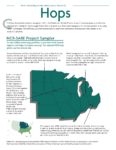
Hops
Craft beer brewing has enjoyed a resurgence in the United States over the last 30 years. As small breweries spring up, so does the opportunity for nearby farmers to supply them with locally grown hops. From weed management, to pest management, to exploring marketing strategies, NCR-SARE has supported work by farmers, researchers, and brewers that has promoted sustainable hop production practices.
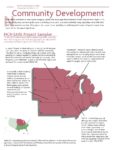
Community Development
NCR-SARE is committed to creating and managing a system that encourages the involvement of farm and non-farm citizens in the process of discovery and learning that leads to achieving a more sustainable, environmentally benign agriculture. NCR-SARE has invested in hundreds of projects that support the sustainability and well-being of all aspects of agriculture and those communities that support agriculture.
Youth Education
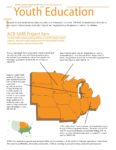
The youth of today are the farmers, educators, scientists, and stewards of tomorrow. NCR-SARE recognizes that youth programs are a way to introduce new and exciting farming and ranching options to youth, parents, and community members.
Abrasive Grit: A New Method of Physical Weed Control
In this story, read about how Frank Forcella's SARE-supported grit applicator field trials have shown up to 90% season-long weed control. -------- Story Source: Chris Bennett Frank Forcella was surrounded with apricot pits – a seemingly useless collection of fruit stones saved in an endless line of 5-gallon buckets. Apricot trees don’t fare well in […]

Jerry DeWitt: NCR-SARE Hero
Read more about Jerry DeWitt.

George Bird: NCR-SARE Hero
Read more about George Bird.
Managing Drought Risk On the Ranch
Producers throughout the nation continue to grow increasingly concerned about water scarcity. Farmers, ranchers, and agricultural educators are exploring new approaches to the challenges associated with water shortage and drought. The National Drought Mitigation Center, (NDMC) based in Lincoln, NE, has a mission of “helping people and institutions develop and implement measures to reduce societal […]
Multi-Farm Cooperative Model
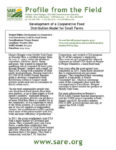
In 2013, Monica Bongue received an NCR-SARE Farmer Rancher grant to develop a small farm cooperative food distribution model in Wooster, Ohio. By 2014, Bongue and a group of farmers formed a not-for-profit cooperative registered in the state of Ohio as Farm Roots Connection Cooperative. The multi-farm Farm Roots Connection Cooperative CSA (Community Supported Agriculture) […]
Profitable Rabbit Production
Rabbit meat is high in protein and low in fat, cholesterol, and sodium when compared to most of the meats eaten in the U.S. Rabbit meat has great potential to feed people in developing countries and could be promoted in the U.S. as a healthful, natural meat and a small farm asset (Fanatico, Anne. “Rabbit […]

Sustainable Agriculture Learning Modules for High School Agriculture
Established with the aid of a NCR-SARE Professional Development grant, these Sustainable Agriculture Learning Modules from the University of Nebraska-Lincoln were created to offer insight into what sustainability within agriculture actually looks like.
Toward a Sustainable Agriculture: A Curriculum for High School Classes
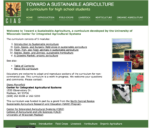
This free high-school curriculum addresses the social, environmental and economic impacts of agriculture. The curriculum provides a critical analysis of agricultural and food systems, and helps students understand new concepts through hands-on examples. The curriculum includes six modules, designed to be incorporated into existing classes.