Showing 21-29 of 29 results
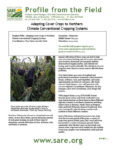
Adapting Cover Crops to Northern Climate Conventional Cropping Systems
Northeast Minnesota is home to a large beef cow-calf sector, several dairy farms, and an increasing amount of cash grain farming. In each of these types of operations, annual cultivation of corn, soybeans, oats, and barley is common. Annual cultivation of these crops can lead to high rates of nutrient leaching and soil erosion, decreased […]
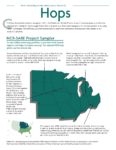
Hops
Craft beer brewing has enjoyed a resurgence in the United States over the last 30 years. As small breweries spring up, so does the opportunity for nearby farmers to supply them with locally grown hops. From weed management, to pest management, to exploring marketing strategies, NCR-SARE has supported work by farmers, researchers, and brewers that has promoted sustainable hop production practices.
Toward a Sustainable Agriculture: A Curriculum for High School Classes
This free high-school curriculum addresses the social, environmental and economic impacts of agriculture. The curriculum provides a critical analysis of agricultural and food systems, and helps students understand new concepts through hands-on examples. The curriculum includes six modules, designed to be incorporated into existing classes.

Sustainable Agriculture Learning Modules for High School Agriculture
Established with the aid of a NCR-SARE Professional Development grant, these Sustainable Agriculture Learning Modules from the University of Nebraska-Lincoln were created to offer insight into what sustainability within agriculture actually looks like.
Iowa Farmer Mechanizes Planting and Maintenance Tasks in Vegetables with Companion Plants
The Genuine Faux Farm, operated by Rob and Tammy Faux since 2004, is a small family operation that grows a wide variety of vegetables that are sold and distributed to about 120 community supported agriculture (CSA) customers. Produce also is sold via farmers’ markets and direct sales to a daycare, retirement center, and grocery store. […]
Michigan State Graduate Student Explores the Benefits of Adding Cover Crops to Vegetable Production
Cover crops can help slow erosion, improve soil, smother weeds, enhance nutrient and moisture availability, help control many pests, and bring a host of other benefits to farms across the country. Cereal-legume cover crop mixtures are of particular interest to growers because they can effectively suppress weeds, control erosion, and scavenge leachable nitrate while also […]
Producers and Researchers Collaborate to Improve Soil Health in North Dakota
Soil—and whole farms—have been renewed through soil-improving practices like cover crops and no till. In the semiarid plains of western North Dakota, a team of producers and researchers are working to boost soil health for improved yield stability, farm income, and natural resource health of farms. The Southwest North Dakota Soil Health Project is a […]
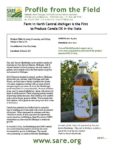
Farm in North Central Michigan is the First to Produce Canola Oil in the State
Dan and Bonnie Blackledge have started a canola oil business on their farm in Marion, Michigan. B & B Farms Canola Oil’s first pressing was only about 50 gallons, but it stands out as the first canola oil grown and pressed in Michigan. B & B Farms is located in central, northern Michigan about mid-way […]
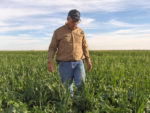
Dakota Farmer's Success Catches On
Dan Forgey has always had an abiding respect for the land that he has farmed for more than 40 years, which is why, as manager of the 8,500-acre Cronin Farms in Gettysburg, S.D., he strives to build soil health—and yields—sustainably. First, he shifted the farm to 100 percent no-till in 1993, around the time that […]