Showing 41-60 of 70 results
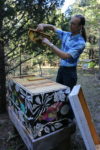
Missouri Beekeeper Uses Horizontal Hives and Local Bees for Increased Sustainability
With SARE support, Leo Sharashkin has been able to share information about starting an apiary with wild local bee stock, using bee-friendly, do-it-yourself hive models, and simple, accessible management techniques.

Building Community and Growing Food with the Next Generation
Greeting parishioners alongside a church parking lot, a four-acre parcel with the accessibility of an urban farm and the mission of a non-profit has been quietly producing and providing food to community members. Sola Gratia Farm is a community-based farm in Urbana, Illinois that is dedicated to producing locally grown, high-quality, natural produce. The community […]
Cover Crop-based Reduced Tillage for Fall Production of Cabbage,Cauliflower and Broccoli Using a Roller-Crimper and No-Till Planting Aid
Cover crops can reduce erosion, improve soil health, slow weeds, enhance nutrient and moisture availability, control pests, and offer other benefits to vegetable producers. After vegetable grower, Thomas Ruggieri, planted cover crops on his farm in rural Clay County, Missouri in 2004, he noticed dramatic improvement in soil fertility and plant health. Ruggieri and Rebecca […]
Economics of Grazing and Haying Cover Crops in North Central Kansas
Grown on an estimated 10 million acres across the country, cover crops are becoming an indispensable part of crop rotations. To maintain this momentum, the development of reliable information at the local level—how to craft a diversified rotation that pays—needs to keep pace with growth in farmers’ interest. That is what motivated Josh Roe to […]
Development of Cost and Labor Effective Produce Sanitation Methods for Small Farms
With programs like Good Agricultural Practices (GAP), Good Handling Practices (GHP), and the Food Safety Modernization Act (FSMA), producers have a more proactive role in minimizing food safety hazards potentially associated with fresh produce. Cucumber producer Carloyn Orr says increasingly, local grocery stores are requiring wash and sanitizing of produce, regardless of farm size. Orr […]
The Economic Analysis of Cover Crops, Soil Health, the Role of Livestock and Impact on Moisture
May 2015 was the wettest month in history in the United States according to the National Centers for Environmental Information, and many communities in Nebraska saw record levels of rain and accompanying flooding. In 2014, three farm families in Nebraska and Iowa received a $22,378 NCR-SARE Farmer Rancher grant to study a variety of economic […]
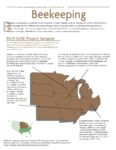
Beekeeping
Beekeepers are stewards of an essential resource; the plants that bees pollinate constitute more than 30 percent of the food we eat and the beverages we drink. While the role of alternative pollinators is vital, bees continue to provide an important service to agriculture in our region. From research projects about Colony Collapse Disorder, to educational programs around beekeeping, to innovative hive designs, NCR-SARE has funded a wide variety of grants to help beekeepers.
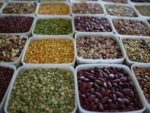
Minnesota Researchers Spill the Beans on Pulses
When the United Nations announced that 2016 would be the “International Year of Pulses,” Craig Sheaffer wasn’t surprised. An agronomist with a bent toward organics, Sheaffer researches perennial native and introduced legumes, grasses, and woody species at the University of Minnesota (U of MN). He was well aware that pulses (also known as grain legumes), such […]
Cover Crop Termination
Farmers use cover crops to slow erosion, improve soil health, enhance water availability, smother weeds, help control pests and diseases, and increase biodiversity on their farms. Although cover crops can be partially grazed or used as forage, they are usually terminated before planting production crops. While row crop producers tend to prefer using herbicides to terminate, most vegetable/horticulture crop producers employ tillage as their primary means of termination. Some organic no-till producers use roller-crimpers to kill the cover crop and leave the mulch on the soil surface to conserve water. NCR-SARE has supported various research projects that have explored the advantages and limits of various cover crop termination strategies.
Utilizing Cover Crops to Increase Productivity, Health and Vigor on Tame Grass Pasture
Donnie Feiring owns and operates Feiring’s Cattle Co. in Beach, ND, a 120-head registered Black Angus cow calf operation. They also run 35 head of commercial yearling heifers. Feiring wanted to improve the health, vigor and productivity of 50 acres of tame grass pasture - tame pastures are cultivated fields planted with introduced (non-native) grass […]
Adapting Cover Crops to Northern Climate Conventional Cropping Systems
Northeast Minnesota is home to a large beef cow-calf sector, several dairy farms, and an increasing amount of cash grain farming. In each of these types of operations, annual cultivation of corn, soybeans, oats, and barley is common. Annual cultivation of these crops can lead to high rates of nutrient leaching and soil erosion, decreased […]

Developing Commercial Elderberry Production in Minnesota
Elderberries are a rapidly growing specialty crop in the Midwest. They have multiple functions in a cropping system because they are perennial, ornamental, a wildlife food source, and they can be planted in low-lying wet areas as a buffer. They can be used to produce value-added products like jams, jellies, wines, and juices. Christopher Patton […]
Management of the Spotted Wing Drosophila Using High Tunnels
Scenic Valley Farms is a family owned farm in Rosemount, Minnesota that uses 15 climate controlled high tunnels to produce organically certified tomatoes, peppers, cucumbers, blackberries, strawberries, herbs, ginger, turmeric, and garlic. They also design and manage high tunnels, computerized climate control systems, and subterranean solar thermal heating systems. Erik Gundacker helps manage the high […]
Managing Drought Risk On the Ranch
Producers throughout the nation continue to grow increasingly concerned about water scarcity. Farmers, ranchers, and agricultural educators are exploring new approaches to the challenges associated with water shortage and drought. The National Drought Mitigation Center, (NDMC) based in Lincoln, NE, has a mission of “helping people and institutions develop and implement measures to reduce societal […]
Good Agricultural Practices for Agricultural Professionals
Due to recent outbreaks of foodborne illnesses, consumers are concerned about food safety, and an increasing number of wholesale and institutional buyers are requiring growers to have GAPs certification, which focuses on reducing microbial risks to fresh fruits and vegetables. Cary Rivard and Jeffrey Callaway developed a program to train agricultural professionals, including Extension agents, […]
Iowa Farmer Mechanizes Planting and Maintenance Tasks in Vegetables with Companion Plants
The Genuine Faux Farm, operated by Rob and Tammy Faux since 2004, is a small family operation that grows a wide variety of vegetables that are sold and distributed to about 120 community supported agriculture (CSA) customers. Produce also is sold via farmers’ markets and direct sales to a daycare, retirement center, and grocery store. […]
Michigan State Graduate Student Explores the Benefits of Adding Cover Crops to Vegetable Production
Cover crops can help slow erosion, improve soil, smother weeds, enhance nutrient and moisture availability, help control many pests, and bring a host of other benefits to farms across the country. Cereal-legume cover crop mixtures are of particular interest to growers because they can effectively suppress weeds, control erosion, and scavenge leachable nitrate while also […]
Producers and Researchers Collaborate to Improve Soil Health in North Dakota
Soil—and whole farms—have been renewed through soil-improving practices like cover crops and no till. In the semiarid plains of western North Dakota, a team of producers and researchers are working to boost soil health for improved yield stability, farm income, and natural resource health of farms. The Southwest North Dakota Soil Health Project is a […]
Farm in North Central Michigan is the First to Produce Canola Oil in the State
Dan and Bonnie Blackledge have started a canola oil business on their farm in Marion, Michigan. B & B Farms Canola Oil’s first pressing was only about 50 gallons, but it stands out as the first canola oil grown and pressed in Michigan. B & B Farms is located in central, northern Michigan about mid-way […]

Spring Wild Bees of Wisconsin Online Identification Guide
The Spring Wild Bees of Wisconsin online guide is designed to help users identify wild bees commonly found in Wisconsin in the spring and early summer by their color, shape, size, and habitat. Users can learn to distinguish among different types of bees and learn about the important roles they play in nature and agriculture.