Showing 1-20 of 21 results
Soils: A Practical Guide for Organic Farmers and Gardeners
This textbook for organic farmers and gardeners covers the physical characteristics of soil, soil chemistry, organic matter, nutrients from soil, carbon flows and nutrient cycles, soil sampling/testing, fertilizers, compost, and manure.
Rotational Grazing with Cover Crops Case Studies
Since rotational grazing of cover crops is not a common practice, to address some of the current questions from farmers in the upper Midwest, the Sand County Foundation of Wisconsin partnered with the Sauk Soil and Water Improvement Group and the University of Wisconsin-Madison to explore short-term agronomic and environmental costs and benefits of managed […]
Organic Field Crop Production Videos
The following videos walk farmers through sustainable concepts and practices for organic weed control, including crop rotations and cultivation techniques. The videos highlight farmer perspectives on these topics and are part of a larger organic field crops course, available at https://courses.organicagronomy.org. Designing a Crop Rotation The concept of crop rotation is not new to organic […]
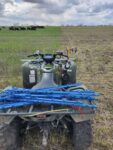
Exploring the Potential of Cover Crop Grazing in Kansas
Cover Crop Grazing: temporary electric cross fencing was used to control grazing areas and was moved regularly in an on-farm cover crop grazing intensity study in Kansas. Photos courtesy of Logan Simon.
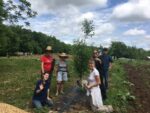
Attracting Beneficial Insects to Urban Farms
Always seeking ways to improve the sustainability of their farm, EarthDance Farm in Ferguson, Missouri used a SARE Farmer Rancher grant to incorporate both permaculture and IPM practices.
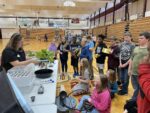
Exploring Hydroponics with Youth
With support from an NCR-SARE Youth Educator grant, University of Missouri Extension Horticulture Specialist Donna Aufdenberg developed resources to teach sustainable approaches to hydroponic growing methods.
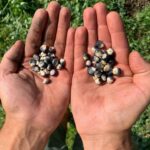
Kansas Farmer Tests Heirloom Corn Varieties
Pantaleon Florez studied no-till growing methods of non-GMO, heirloom dent corn at Maseualkaulli Farm in Lawrence, Kansas.
Producing Quinoa in North Dakota
Two North Dakota producers looked at quinoa production and marketing in North Dakota.
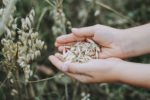
Organic Oat Variety Trial Shares Findings
North Dakota researcher Melanie Caffe-Treml trialed 20 oat varieties under organic management.
Does Open-Pollinated Corn Have a Place on Today’s Organic Farm?
On 205 acres near the picturesque bluffs of the Mississippi River, Stanley Smith raises beef cows and grows organic corn in southeastern Minnesota. He grew up on this small farm in the rolling hills of Winona County and worked alongside his dad until his dad retired. Smith and his wife, Vickie, purchased the farm, and […]
Evaluating Microbecontaining Crop Stimulants (MCCSs)
The decomposition of organic matter relies on bacteria and fungi that are commonly referred to as soil microbes. Matthew Kleinhenz, The Ohio State University professor and extension specialist, says many microbes are included as leading components of microbecontaining crop stimulants (MCCSs) advertised to enhance soil and crop health, accelerate soil nutrient cycling, and improve crop […]
Development of Cost and Labor Effective Produce Sanitation Methods for Small Farms
With programs like Good Agricultural Practices (GAP), Good Handling Practices (GHP), and the Food Safety Modernization Act (FSMA), producers have a more proactive role in minimizing food safety hazards potentially associated with fresh produce. Cucumber producer Carloyn Orr says increasingly, local grocery stores are requiring wash and sanitizing of produce, regardless of farm size. Orr […]

The Viability of Small Scale Aquaponics in Urban and Rural Underserved Communities
Combining concepts from both aquaculture and hydroponics, aquaponics systems produce both fish and plants. The practice dates as far back as sixth century China, where duck pens were placed over fish ponds that eventually connected to rice paddies and fields (Tonya Sawyer, 2014). More recently, Nebraska aquaponics expert, Greg Fripp has been building closed, recirculating […]
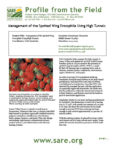
Management of the Spotted Wing Drosophila Using High Tunnels
Scenic Valley Farms is a family owned farm in Rosemount, Minnesota that uses 15 climate controlled high tunnels to produce organically certified tomatoes, peppers, cucumbers, blackberries, strawberries, herbs, ginger, turmeric, and garlic. They also design and manage high tunnels, computerized climate control systems, and subterranean solar thermal heating systems. Erik Gundacker helps manage the high […]
Managing Drought Risk On the Ranch
Producers throughout the nation continue to grow increasingly concerned about water scarcity. Farmers, ranchers, and agricultural educators are exploring new approaches to the challenges associated with water shortage and drought. The National Drought Mitigation Center, (NDMC) based in Lincoln, NE, has a mission of “helping people and institutions develop and implement measures to reduce societal […]
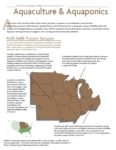
Aquaculture and Aquaponics
Aquaculture is the cultivation of fish, aquatic animals, and plants. Aquaponics is a bio-integrated system that links recirculating aquaculture with hydroponic vegetable, flower, and/or herb production. In aquaponics, nutrient-rich effluent from fish tanks is used to fertigate hydroponic production beds. SARE has supported advances by producers, researchers, and educators that are helping to advance aquaculture and aquaponics into working models of sustainable production.
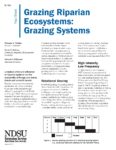
Maintenance of Natural Sustainable Riparian Communities Fact Sheets Series
A graduate student from North Dakota State University created these five extension fact sheets after monitoring and reporting on the riparian ecosystem associated with the Middle Sheyenne River, a perennial stream in eastern North Dakota.
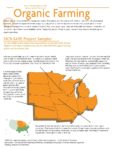
Organic Agriculture
Organic agriculture is a whole-farm management system that replaces synthetic inputs with methods that mimic natural ecological processes. Demand for organic food is far outpacing supply, as U.S. sales in this dynamic sector have nearly quadrupled in the last decade. NCR-SARE has invested in more than 100 projects to help achieve the sustainability and well-being of all aspects of organic agriculture and those communities that support organic producers.
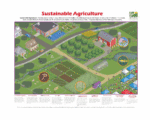
Sustainable Ag Poster
A poster depicting the elements of sustainable agriculture.
Poultry Your Way
Poultry Your Way is for anyone interested in commercially raising, processing, and marketing poultry. It is designed to help you consider alternatives, and to help you make decisions about which alternative(s) will be most compatible with your family and business goals.