Showing 141-160 of 280 results
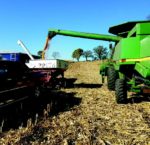
Partnering to Promote Cover Crops in Southeast Wisconsin
Cover crops can improve a farmer’s bottom line in many ways, whether it’s by lowering fertilizer needs, reducing weed and pest pressure, or boosting yields, but as with any investment, there are things to take into consideration when planning. Jim Stute is a farmer in southeast Wisconsin, and a crop and soil researcher with the […]
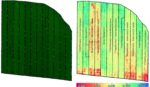
Using Drone Sensors for Site-Specific Nitrogen Application
From shooting photos from small planes to using a powered parachute with the help of a sport pilot license, Dean Stevens has been taking to the sky to catch a glimpse of his family’s southeast Nebraska farm fields for the better part of 30 years. With recent support from a $15,000 NCR-SARE Farmer Rancher grant, […]
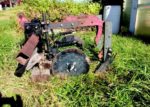
Reducing Tillage in Vegetables Using Cover Crops
When Thomas Ruggieri first planted cover crops on his vegetable farm in rural Missouri in 2004, he noticed improvements in soil fertility and plant health. Ruggieri and Rebecca Graff run Fair Share Farm, a diversified vegetable farm with a 140-member CSA in Kearney, Missouri. Vegetable growers can use cover crops to help reduce erosion, improve soil […]
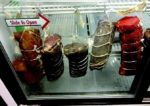
Expanding Local Charcuterie in Northwest Missouri
Watching feed prices go up and pork prices go down can make value-added product lines attractive for a hog producer. Jim Pierce is working on value-added charcuterie products on his farm in Missouri.

Kansas City Food Hub Strengthens Brand and Marketing
In 2015, a small farm cooperative in the Kansas City area had a dilemma. Fresh Farm HQ (FFHQ) Cooperative Association was helping small and medium-sized farmers access wholesale markets in the Kansas City area, but with more than 18 produce distribution companies already operating in the area, they needed to differentiate themselves; they needed to […]
Mechanization Options for Root Crops on Small Farms
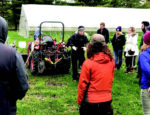
On five acres of land in central Michigan, Dru and Adam Montri grow vegetables with seasonal field production and six hoophouses. They sell their Ten Hens Farms produce at the farmers market, to local grocers, area restaurants, and a regional food distributor. They had a problem with root crops, and two other nearby vegetable growers did […]

Urban Farmers Connect with Youth Garden
Integrating agriculture into urban settings is not a new concept, but more and more, the benefits are being realized by communities, policymakers, and food-system entrepreneurs (NCAT-ATTRA 2018). One such entrepreneur is Brent Lubbert, whose nonprofit organization is growing vegetables and future farmers on six plots of land in the Gifford Park Neighborhood of Omaha, Nebraska. […]
Native Plants Attract Beneficial Insects
Whether building boxes for mason bees or planting habitat for predatory beetles, farmers seeking sustainability can encourage populations of pollinators and beneficial insects on the farm. Researcher Doug Landis knows that many native plant species are highly attractive to both pollinators and natural enemies, and with help from a $199,887 NCR-SARE Research and Education grant, […]
Sprinkler Deterrent System Helps Farmer Control Wildlife
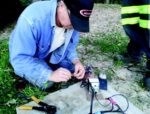
Enhancing biodiversity on a farm can result in cleaner air and water and increased wildlife. But what happens when the wildlife gets a little too close to your crop? That’s the problem sweet corn grower, Scott Kelly, was facing on his farm near Kearney, Missouri. “The demands of growing produce sometimes seems never-ending,” said Kelly. […]

An Open-Source, Automated Irrigation System for Small Farms
Christian and Katie Flickinger were experienced urban farmers in Michigan who were farming eight plots in various locations. When they decided to consolidate their operation and buy a 7-acre farm in Howell, Michigan, they faced the challenge of converting a long-standing, non-rotated cornfield into the organic, heirloom farm of their dreams. Among the other items […]

Soil Remediation Techniques in Urban Agriculture
Dirty Boots Farm in Illinois received SARE support to work with a neighboring farm, Chicago Patchwork Farms, on urban soil remediation.

Controlling Pigweed with Minimal Tillage in Fall Vegetable Crops
Managing and controlling weeds is an ongoing challenge and frustration for many farmers, but it can be especially cumbersome for organic producers, whose options for herbicides are limited. For these organic producers, no-till and conservation tillage systems can help conserve soil and can be used for weed control. Tom Buller, a vegetable grower and extension […]
Farm Towers: Urban Agriculture Goes Vertical
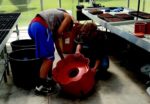
In southeast Nebraska where corn and livestock fields dominate the agricultural landscape, Auburn High School agriculture teacher, Ashton Bohling, offers a variety of agricultural education opportunities for curious youth. Students have access to an aquaponics system (an aquaculture system with tilapia) and a 24x48’ greenhouse. With support from a $1,999 NCR-SARE Youth Educator grant, Bohling […]
Spring-Grazing Cover Crops with Nebraska’s Knuth Farms
When a fourth-generation farm in Mead, Nebraska began to diversify their primarily cash crop operation in 2012, they gave some thought to cover crops and livestock. Knuth Farms didn’t want to buy cattle or become beef producers, but they did want to diversify their income stream, capture some of the soil benefits of cover crops, […]

Goat Milk Soap Making Manual
This 38-page manual was created to be used in Goat Milk Soap Making workshops and as a tool for producers interested in making goat milk soap. It was developed by Krista Duval of Creekside Farms in 2017, as part of a SARE-supported project to amplify specialty dairy opportunities for local producers and food entrepreneurs in Appalachia Ohio.
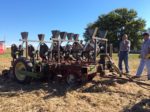
Illinois Farmer Builds Precision Seeder to Maximize Cover Crop Advantage
Ralph “Junior” Upton is no novice when it comes to no-till and cover crops. His grain farm in the northeast corner of Hamilton county Illinois is 100% no-till with 1,800 acres of corn, beans, and wheat, and approximately 1,200 acres in cover crops. Upton has been farming more than 50 years, and the farm has […]
Traditional Fertilizer, Modern Applications for Iroquois White Corn
Farmers have long relied on liquid fish fertilizers because they are a source burn-free nitrogen, phosphorus, and potassium. Traditional Native American growers were well aware of the benefits that decaying fish could bring to their soil; they buried fish under mounded soil and planted the 3 Sisters (corn, beans, and squash) directly on top of […]

Barbara James Norman: NCR-SARE Hero
Read more about Barbara Norman.
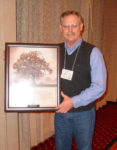
Jim Stordahl: NCR-SARE Hero (Presented Posthumously)
Read more about Jim Stordahl.

Sustainable Agriculture Resources and Programs for K-12 Youth
This 38-page guide to sustainable agriculture-oriented educational opportunities for schoolchildren features more than 75 programs and curricula nationwide.